
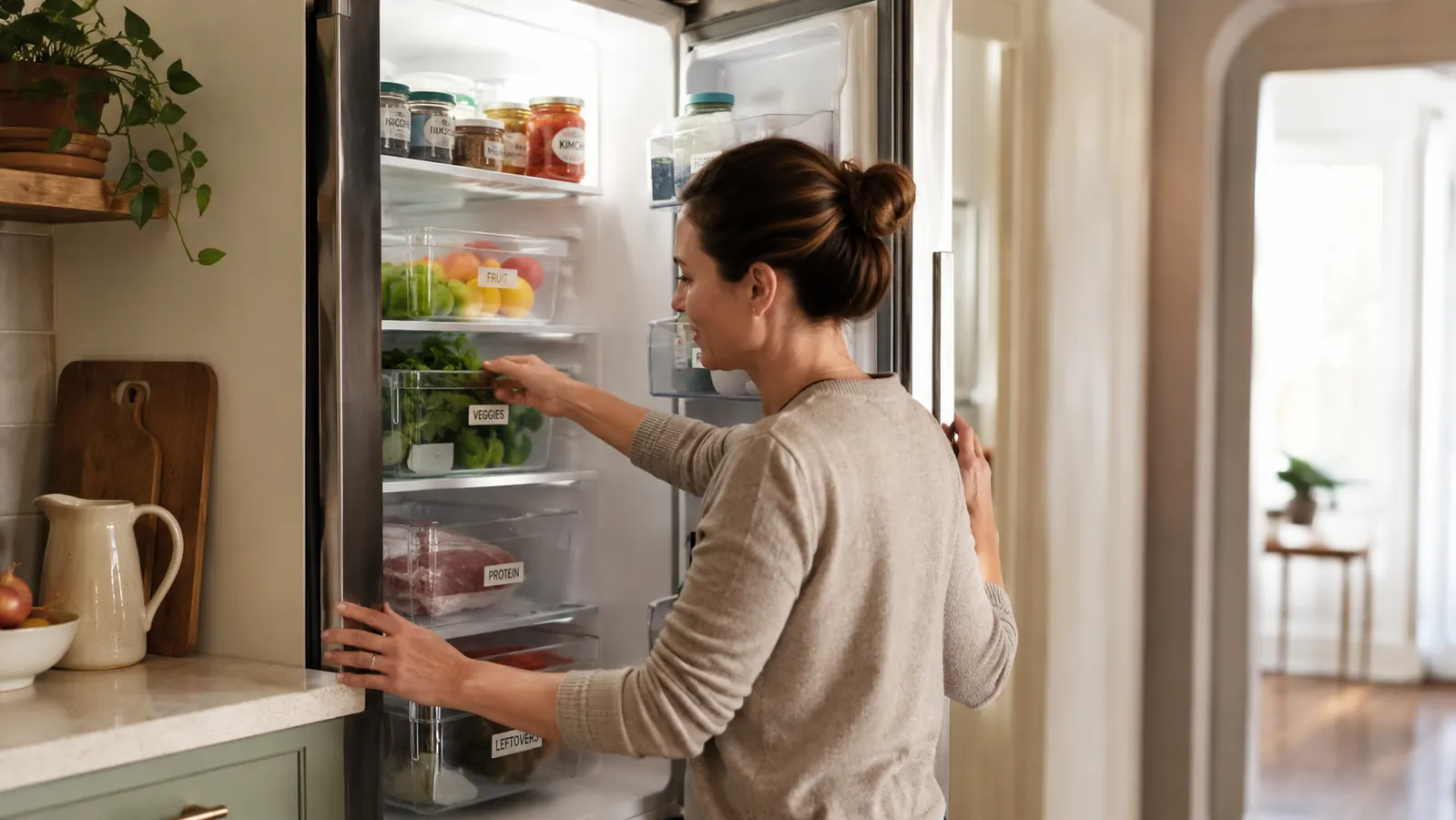
Six months ago I pulled the Utopia Home fridge organizer bins out of the box in a client's kitchen in Naperville, Illinois. The client, a mom of three named Renee, was spending real money on groceries every week and throwing away a good portion of it because things got buried in the back of her refrigerator and forgotten. The Utopia Home 8-pack was the set I recommended, because at that point I had already tried it in four other client kitchens and had watched how the bins held up through weekly grocery resets, toddler hands, and the occasional spill-and-slide. What I found over those six months is more nuanced than the 4.8-star rating suggests, and I want to give you the full picture before you click buy.
I have been a professional home organizer for fifteen years. The refrigerator is one of the first places I look when I walk into a new client's home, because chaos in the fridge usually signals chaos in the meal-planning rhythm. I have tried most of the major fridge bin brands on the market. The Utopia Home set is the one I keep coming back to for clients with standard-depth refrigerators, but the reasons why are specific, and so are the reasons it sometimes falls short.
The Quick Verdict
A well-priced 8-pack that genuinely holds up through daily use in most standard refrigerators, with one sizing caveat that will frustrate owners of French door or counter-depth fridges.
Amazon Check Today's Price →Still losing produce to the back of the fridge? These bins stop that in one grocery cycle.
The Utopia Home 8-pack is the set I install most often in client kitchens. Clear, stackable, easy to pull out and wipe down. Check today's price before you keep reading.
Amazon Check Today's Price on Amazon →How I've Used These Bins Across Client Kitchens
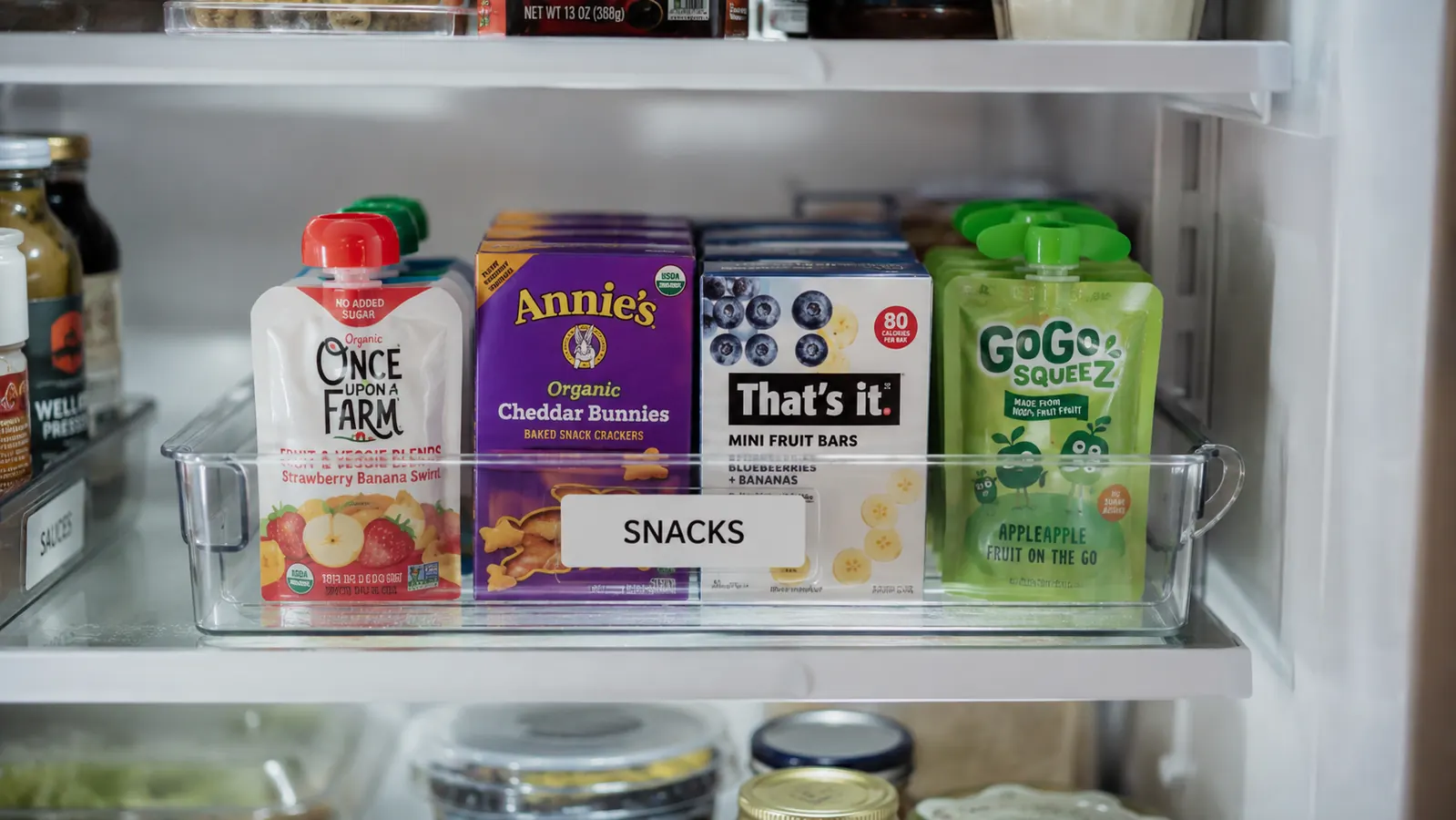
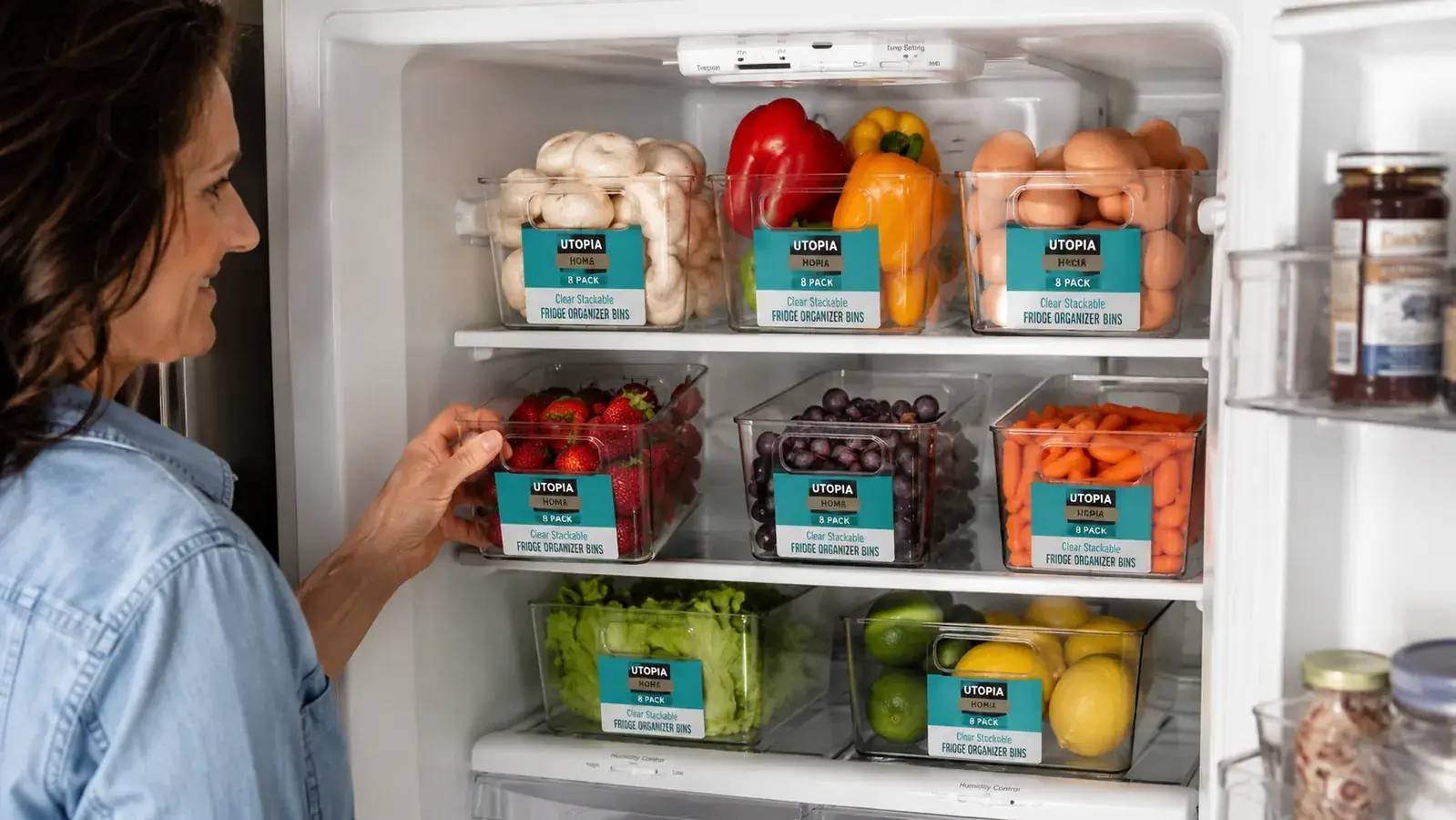
My standard install for a new fridge organization project uses the Utopia Home 8-pack as the backbone of what I call the zone system. I dedicate one bin per food category: snacks for kids, deli meats, cheese, yogurt and drinks, leftovers, produce that doesn't go in the crisper drawer. The goal is that anyone in the household can open the refrigerator and immediately find what they need without moving anything.
Over the six months since Renee's install, I have checked in on her refrigerator four times, which is more follow-up than I usually do. I wanted to track specifically how the bins looked at the 6-week, 3-month, and 6-month marks. I also texted three other clients who had the same set installed between four and eight months prior. What I'm describing here is drawn from all of those conversations, not just a one-time snapshot.
For context: Renee's family of five cycles through a full grocery shop every Saturday morning. The bins get unloaded, wiped down at the bottom if anything spilled, and refilled each week. That is real use, not display-cabinet conditions.
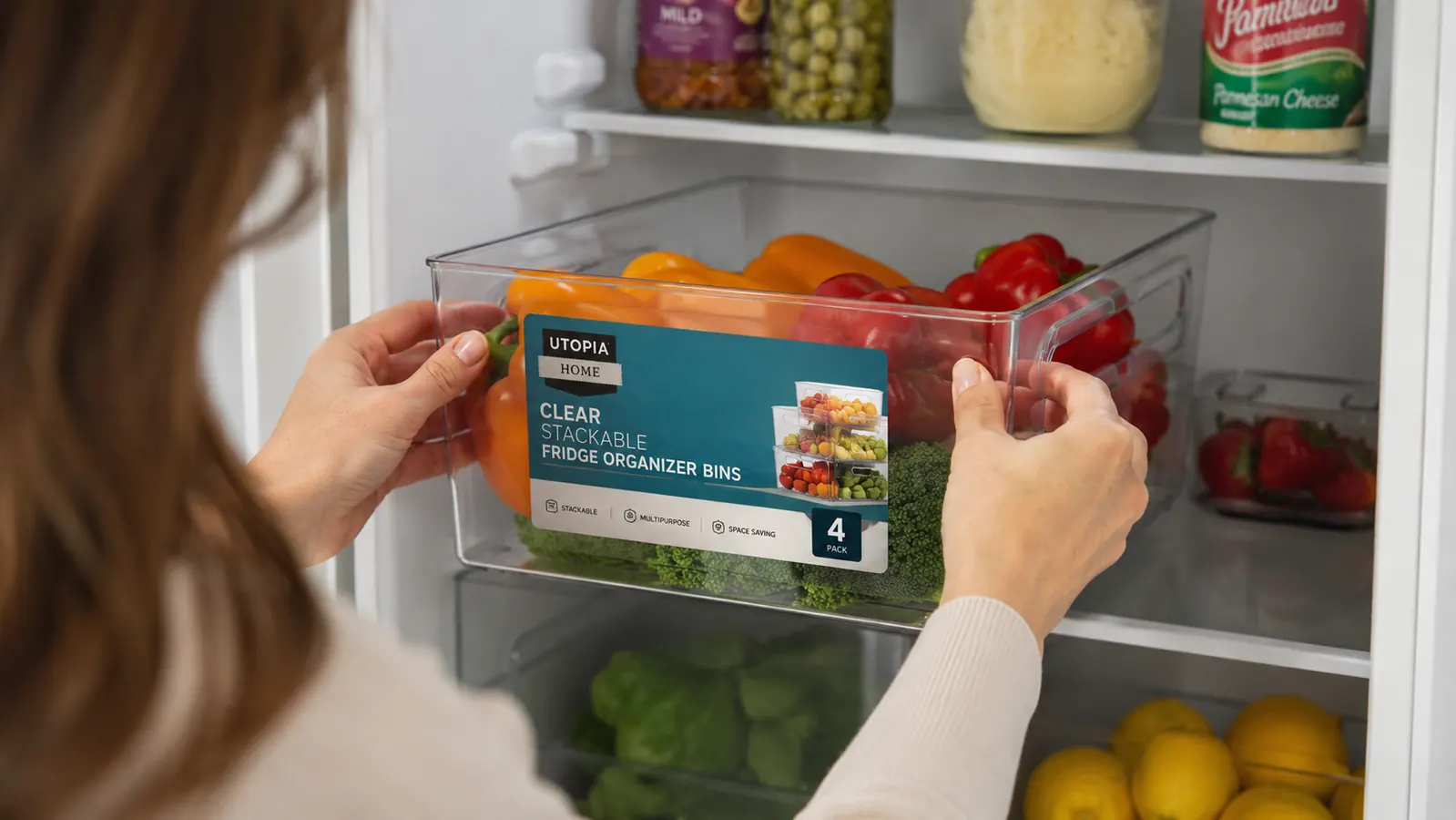
What the Bins Look Like at Six Months
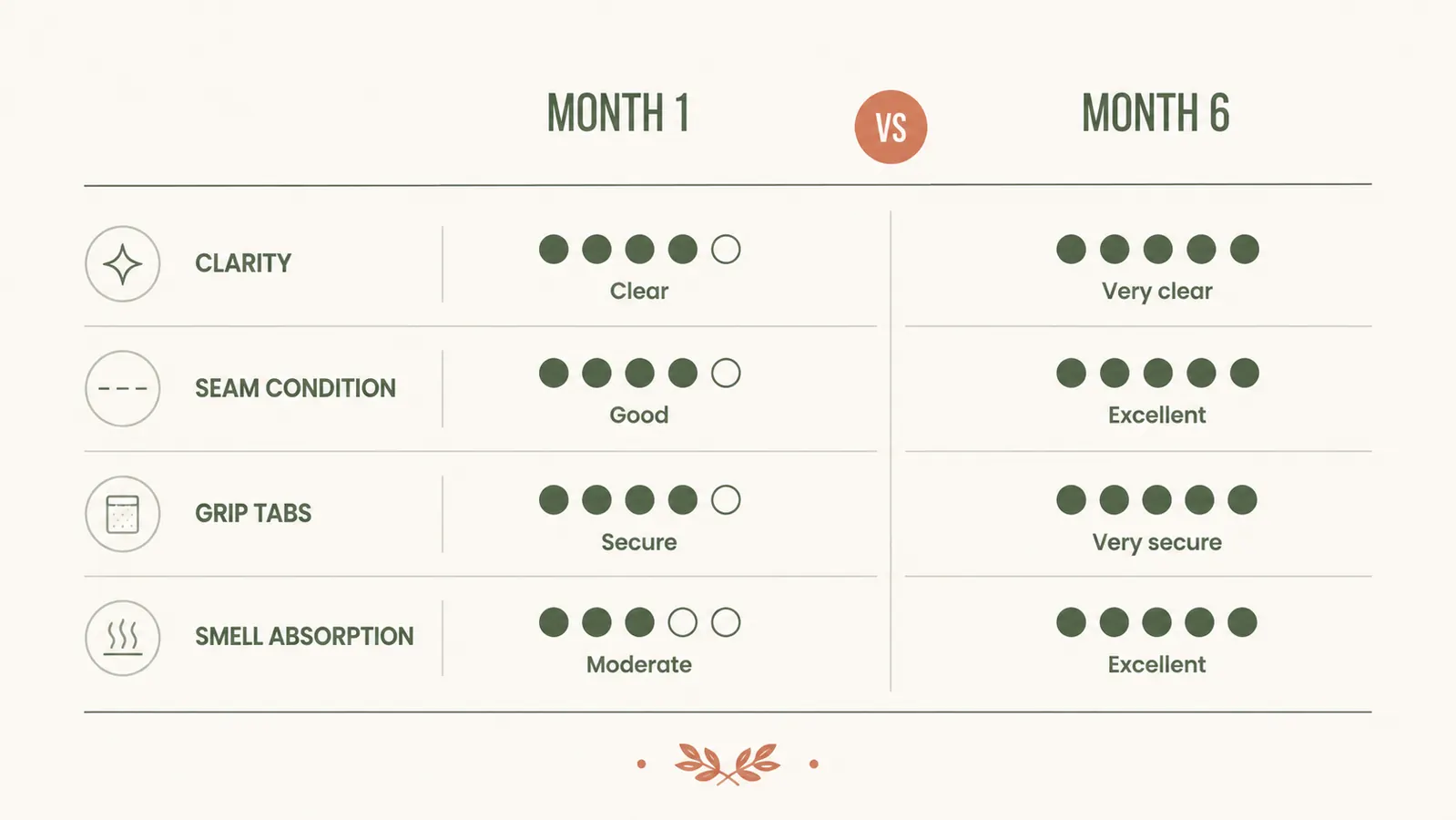
At the six-month mark, the clarity of the plastic is holding up better than I expected. I have used cheaper fridge bins that turn hazy within a few months, especially if the household cleans them with anything mildly abrasive. The Utopia Home bins cleaned with a damp cloth still look close to new at this point. No crazing or milky discoloration on any of Renee's eight bins.
The seams at the corners are clean. This is where I've seen cheaper bins fail, usually because the plastic is thinner there and the repeated temperature cycling in a refrigerator creates micro-stress at the joints. I checked each bin by pressing into the base corners. None of them have developed flex or separation at the seam. That matters because a cracked seam in a fridge bin is how you get a slow condensation leak onto your shelf lining, which is a mess I've cleaned up more times than I want to count.
The pull-out handle tabs on the front of each bin are still firmly attached. This is the detail that distinguishes a usable fridge bin from one that frustrates everyone after the first few weeks. If the pull tab feels loose or flexes too much, people stop pulling the bin out and instead reach over it to grab things, which defeats the whole point of the system. All eight tabs feel secure.
The One Real Limitation: Sizing in Non-Standard Refrigerators
Here is the thing nobody warns you about loudly enough. The Utopia Home bins are sized for standard-depth refrigerator shelves, roughly 16 to 18 inches deep. If your client or your own home has a French door refrigerator with wider shelves, or a counter-depth fridge where the shelf depth is only 14 inches, you are going to have a fit problem. Three of the eight bins in the set are the larger size, and those larger bins don't sit properly on a 14-inch shelf. They overhang the edge just enough to tilt slightly toward the front, which means they will slide when you open the door.
I ran into this at the Naperville install and at one other client home. The fix is to use only the smaller five bins from the set and put the three larger ones in a pantry shelf instead, which actually works well and adds some versatility to the purchase. But if you bought this set expecting all eight bins to live in the fridge, and you have a counter-depth model, you will be disappointed. Measure your shelf depth before ordering. Write it down. Take it with you to your phone before you click the link.
For clients with standard-depth refrigerators, this is a non-issue. All eight bins sit flat and stable and the system works exactly as intended. It's worth knowing going in, though, because the product listing doesn't shout it.
What I Liked
- Plastic clarity holds up through six months of weekly use and regular wiping
- Seam integrity at corners remains solid with no cracking or flex
- Pull-out handle tabs stay firmly attached after hundreds of open-close cycles
- Set of 8 provides enough bins to zone an entire refrigerator in one pass
- Stackable design lets you use full vertical space on taller shelves
- Easy to remove and hand-wash if something spills inside
Where It Falls Short
- Larger bins in the set overhang 14-inch shelves in counter-depth refrigerators
- No lid option, so open bins can pick up fridge odors over time if you have something pungent inside
- The smaller bins are a bit shallow for tall bottles or condiment jars
- Color is true clear with no tinting, which some clients prefer but others find clinical
How the Zone System Actually Changes Behavior
The part that surprised me most after six months is what happened to Renee's food waste. She texted me at the three-month mark to say she had stopped throwing away produce she forgot about. That's a real behavior change, and I want to explain why the bins drive it. When food is loose on a refrigerator shelf, items get pushed to the back during refills and stay there until they're past their date. When food lives in a designated bin, the bin has to be pulled out to put new groceries in, which means the person doing the refill sees what's already in there and places the older items in front.
It's not magic. It's friction reduction in the right place. The bins make the first-in-first-out rotation that every food-safety guide recommends the path of least resistance instead of an intentional habit you have to remember. Renee didn't start being more organized. The system made the organized behavior automatic. That's the outcome I'm aiming for in every client kitchen.
Renee didn't start being more organized. The bins made the organized behavior automatic. That's what a good system does.
Odor Absorption Over Time
One honest observation from the six-month mark: the bins that housed pungent items, specifically the bin Renee uses for leftover fish and the bin holding blue cheese, have a faint retained smell even after wiping. It's not strong and it doesn't transfer to other foods, but it's there. I noticed it when I held the bin close and sniffed, which is not a normal thing most people do, but I was testing specifically for this.
The material doesn't seem to absorb odors actively. It's more likely that the textured interior surface at the base of each bin catches microscopic residue that wiping doesn't fully remove. A monthly soak in warm soapy water solves it. Renee had been doing the quick wipe-down approach, which is what most people do, and it's fine for most bins but leaves a trace on the two that hold the most aromatic foods. If you are diligent about the monthly soak, this is a non-issue.
Alternatives I Considered Before Recommending These
Before I settled on the Utopia Home set as my go-to recommendation for standard-depth fridges, I tried three other bins in client homes. One was a set from a brand that uses slightly heavier plastic, and the bins held up beautifully, but the price was nearly three times higher for the same number of pieces. Another set had lids, which solves the odor issue I mentioned, but the lid tabs broke on two of the six bins within four months. A third set looked identical to the Utopia Home bins but was made of thinner plastic that yellowed slightly by month three.
What the Utopia Home 8-pack does well at its price is give you enough bins to actually implement a full zone system without buying two sets. Most competing sets at a similar price come in packs of four or six, which means you cover half the fridge and leave the rest unorganized, which is worse than not starting at all because the organized half feels pointless when the unorganized half is right next to it. Eight bins is the right number for a two-to-four person household's standard refrigerator.
If you want a deeper comparison of how the Utopia Home bins stack up against a specific alternative, I've written a full side-by-side breakdown in my Utopia Home vs ClearSpace fridge organizer comparison. And if you're still deciding whether fridge bins are worth it at all, my piece on 10 ways fridge bins change your meal prep routine walks through the specific behavior changes I've seen in client homes.
Who This Is For
The Utopia Home 8-pack is the right buy if you have a standard-depth refrigerator, you are losing food to the back of the fridge, and you want a set that gives you enough bins to do the whole thing in one pass. It's also a good fit if you are setting up a fridge organization system for someone else, like a parent you're helping downsize or a client, because the clear plastic and the pull-out tabs make it usable for people who would never remember to dig into the back of a shelf.
If you cook proteins that have strong odors several nights a week, plan to do the monthly soak rather than just the weekly wipe. And if you are the type of person who wants a lid on every bin to contain smells and keep things dust-free, this set is not for you. Look for a lidded set instead. The trade-off is that lidded bins are harder to grab from quickly, so they require more intentional use.
Who Should Skip It
Skip this set if your refrigerator shelves are 14 inches deep or less. Measure first. If you have a French door fridge with the wide center shelves but the standard side shelves are shallower than you think, the larger bins will not sit flat. You will spend a week adjusting them and eventually pull them out, and then you'll be frustrated with the whole concept of fridge organization rather than frustrated with the specific sizing issue, which is the wrong takeaway.
Also skip if your household has more than six people. The 8-pack fills a standard four-shelf refrigerator for a family of four to five. A larger family fills the fridge more densely and bins become harder to pull in and out without bumping into each other. At that scale you are better served by fewer, deeper bins designed to hold more volume per zone.
Six months in, these bins are still doing exactly what I put them there to do.
If your refrigerator is standard-depth and you've been losing groceries to the back of the shelf, the Utopia Home 8-pack is the most complete single-purchase solution I've tested at this price. Check today's price on Amazon and see if it's still in budget range.
Amazon Check Today's Price on Amazon →