
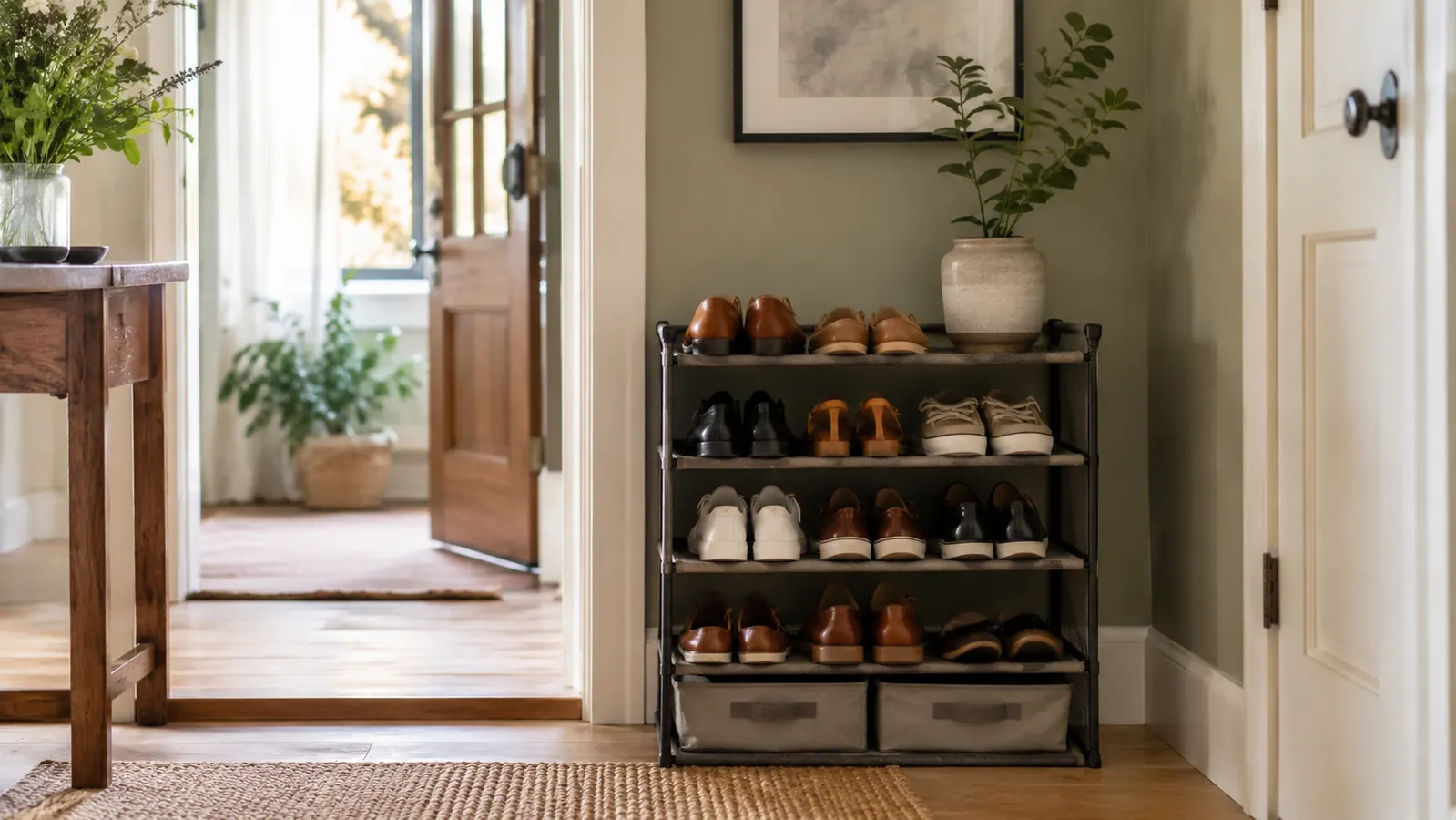
The first thing I noticed when I walked into Renee's house was the entryway. Or, more accurately, the obstacle course where the entryway used to be. A pair of rain boots had tipped over in front of the door. Her daughter's sneakers were wedged under a coat that had missed its hook. Her husband's work shoes were sitting on top of a backpack, which was sitting on top of a mat that had long since been buried. Before I'd even said hello, I'd tripped over a sandal. Within a week of my visit, a Kitsure shoe rack was standing in that exact spot, and Renee texted me a photo of her kids leaving for school without a single raised voice.
I've been organizing homes professionally for fifteen years. I've seen entryways that made grown adults cry. I've seen families argue every single morning over where their shoes are, who moved them, and why nobody ever puts anything away. And the thing I've learned is that the entryway isn't just a physical space. It's the emotional thermostat for the whole house. When it's chaotic, the chaos follows people into their car, their commute, their workday. When it's calm, something genuinely shifts.
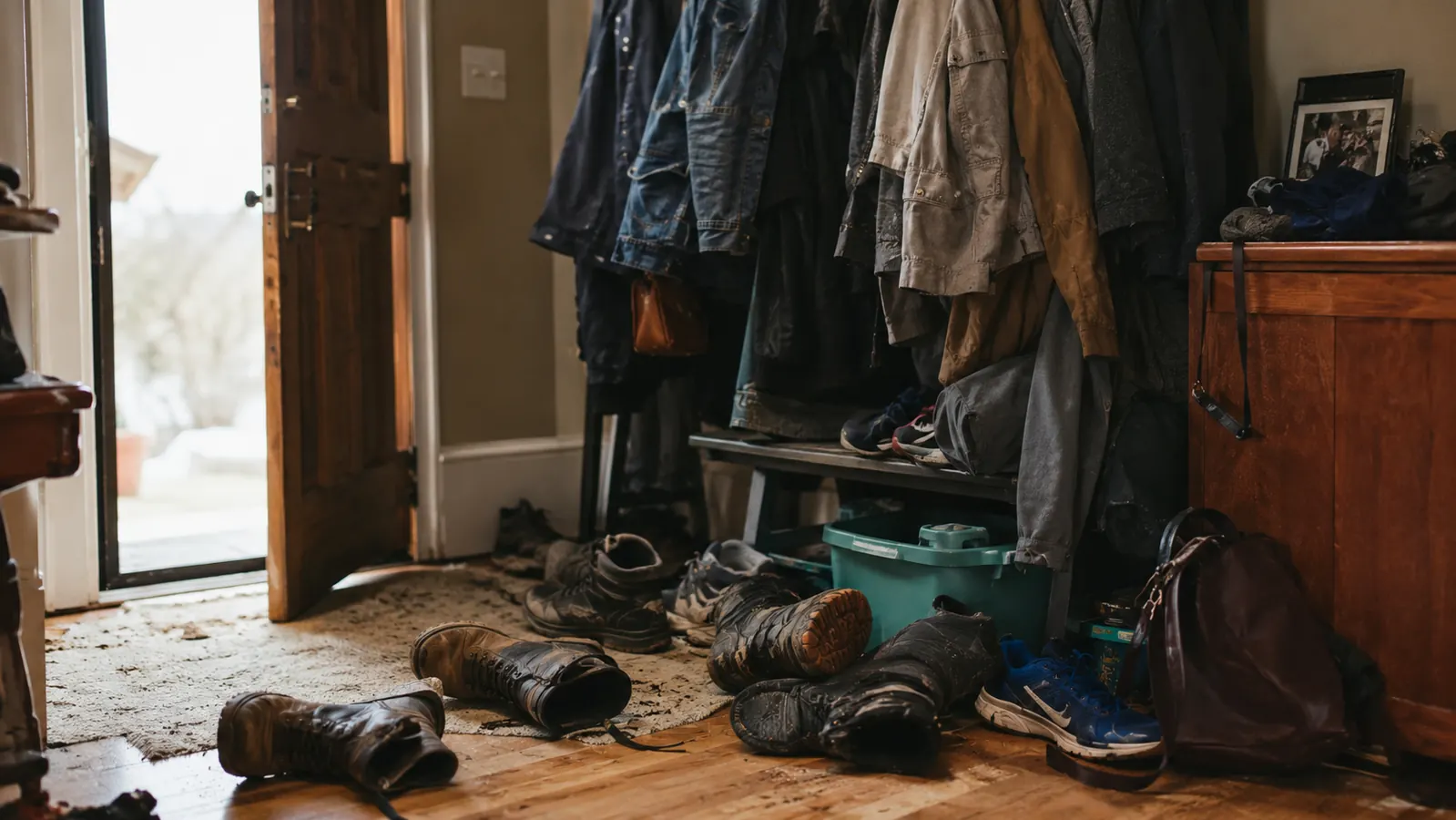
Renee's entryway had been a sore spot for three years. They'd tried a basket. The basket became a laundry pile. They'd tried a built-in bench with cubbies that they'd seen on a renovation show. The cubbies were too big for kids' shoes and too small for her husband's boots. The shoes ended up in front of the cubbies instead of inside them. She'd tried just asking people to put their shoes away, which, if you've lived with children, you know how that goes.
When I looked at the entryway honestly, the problem wasn't motivation or habits. It was that there was no designated landing spot that made sense for how they actually moved through the space. They came in through the front door, toed off their shoes right there, and needed somewhere within two steps to put them. That somewhere didn't exist, so the shoes lived on the floor.
The entryway is the emotional thermostat for the whole house. When it's chaotic, that feeling follows everyone out the door and into their day.
My go-to solution for this exact situation is a freestanding tiered shoe rack. No installation. No measuring for built-ins. No asking a landlord. You set it down in the right spot, and immediately shoes have a home. What I've been reaching for most consistently over the past year or so is the Kitsure shoe rack, specifically the non-woven fabric model. It comes in a few sizes, assembles in about ten minutes, and holds anywhere from 8 to 12 pairs depending on the configuration. The fabric cover keeps it looking intentional rather than industrial, which matters in an entryway that guests see first.
If shoes pile up at your front door every morning, this is the fix that takes ten minutes to set up.
The Kitsure non-woven shoe rack holds 8 to 12 pairs, assembles without tools, and looks presentable enough for any entryway. Over 14,000 buyers agree it works.
Amazon Check Today's Price on Amazon →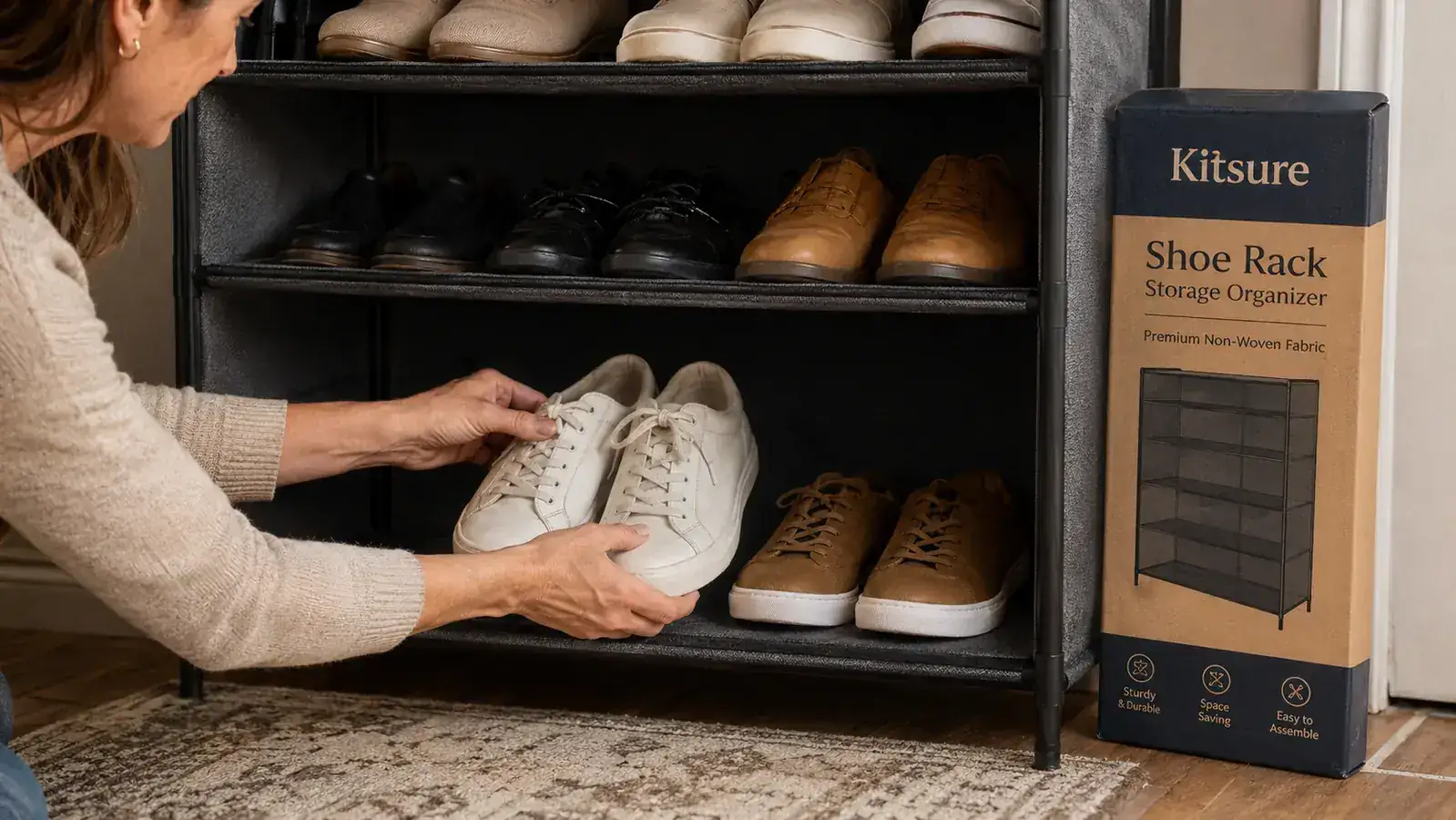
For Renee's family of four, I recommended the larger size and placed it right inside the door on the left side, where the boot-tipping was worst. We kept it to two pairs per person: the shoes they wear most days and one backup pair. Everything else went to a closet shelf or a bin in the mudroom. That edit is half the work. The rack isn't a dumping ground for every shoe in the house; it's a staging area for the shoes in rotation right now.
The non-woven fabric on the Kitsure isn't decorative. It actually keeps the rack from looking like a steel grid of chaos when the shoes aren't perfectly lined up, which, in a real household, they never are. The fabric softens it. From three feet away, it reads as tidy even if one pair is slightly crooked. That forgiveness matters more than any organizing system that requires perfection to look good.
I'll be honest: the Kitsure isn't built for boot-weight families who buy twelve pairs of shoes per person per season. The fabric will show wear if it's over-loaded and the shelves aren't evenly balanced. I've seen the top-heavy versions tilt over time when people stuff the top shelf and leave the bottom shelves empty. But for a family using it as intended, rotating 8 to 10 pairs through a season, it holds up well. I've installed it in over a dozen client homes and the check-ins have been positive.
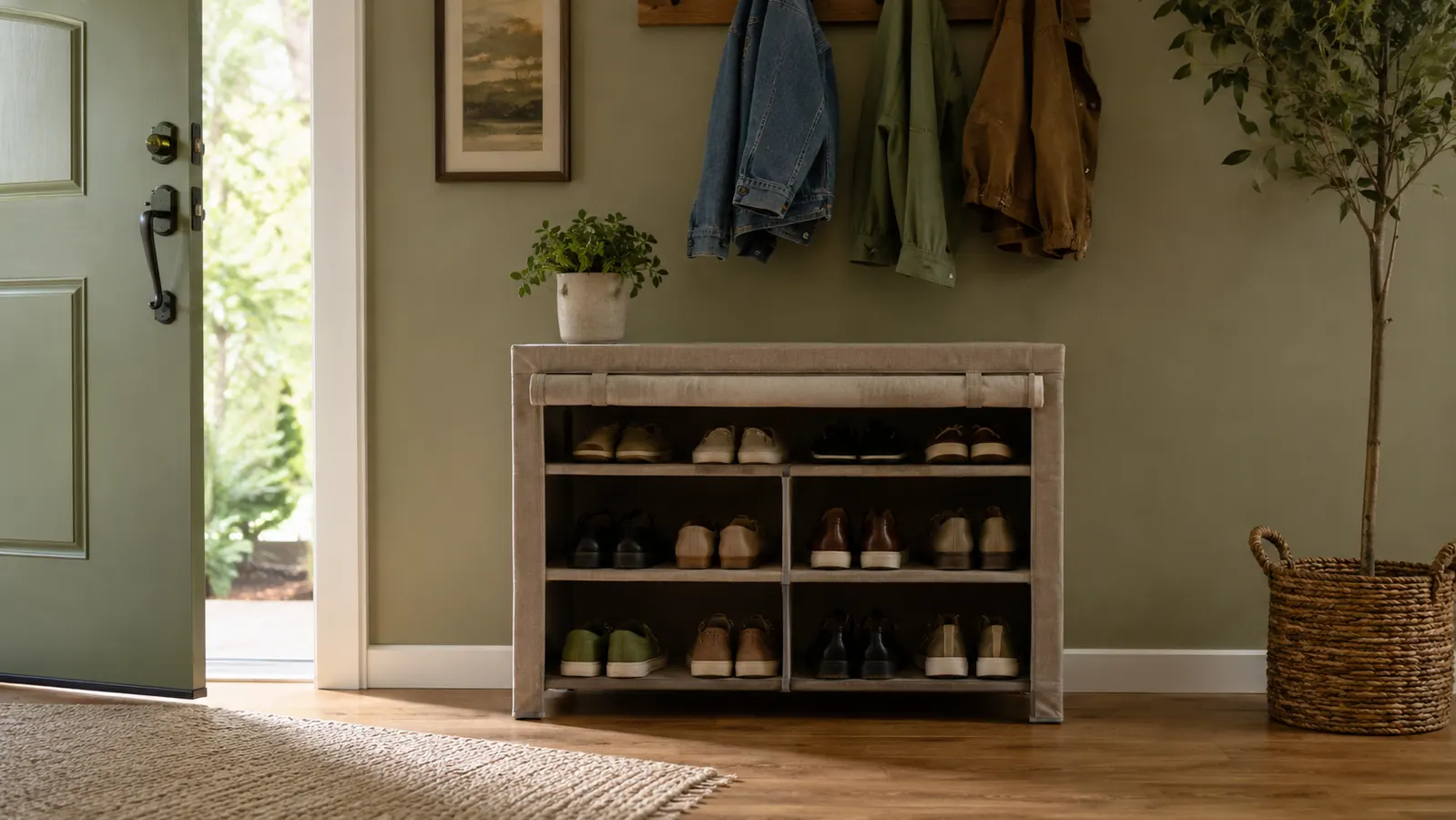
Renee's family has had theirs for about four months now. She told me the morning arguing stopped within the first week. Her daughter knows exactly where to look for her sneakers. Her husband's boots go on the bottom shelf every evening. The front door area now takes her thirty seconds to tidy instead of fifteen minutes of frustrated digging. She said the house feels different when she comes home from work, and she was right. That's not an exaggeration. Clutter at the entry point sets a mood, and clearing it out resets the mood every time.
What I'd Tell You If We Were Sitting at My Kitchen Table
If you have a shoe problem at your front door and you're thinking about it at all, stop thinking and just solve it. The solutions people usually try first, the baskets, the pretty bowls, the asking politely, don't work because they don't give the shoes a clear, designated, easy-to-use place to land. A tiered shoe rack does that in a way nothing else matches for the price. The Kitsure specifically is what I'd hand you if you were standing in my supply closet asking what to grab. It's unflashy, it works, and it takes less time to assemble than it takes to have one more argument about where everyone's shoes are.
Put it within two steps of wherever shoes come off. Don't overfill it. Keep the current-rotation shoes on it and rotate the rest to storage. That's the whole system. Nothing more complicated than that. The entryway doesn't need a renovation. It needs a rack and ten minutes.
Ten minutes of setup and your entryway looks calmer before dinner tonight.
The Kitsure shoe rack is the freestanding, no-tools solution Dana recommends for entryways and closets in real family homes. See current availability and sizing options on Amazon.
Amazon Check Today's Price on Amazon →