
Eight months ago I ordered my first Kitsure shoe rack for a client in Minneapolis who had a 42-inch entryway and exactly zero closet space near the front door. She had seven people in the house, three of them school-age kids, and shoes were piling up in every direction every single afternoon. The Kitsure non-woven shoe rack shelf was the most affordable enclosed-style rack I could find in a narrow footprint, so I took a chance. That install went well enough that I kept recommending it. I have now put this rack in more than 20 homes across entryways, bedroom closets, mudrooms, and one very small laundry room. This review covers what I have learned across all of those installs.
The short version: the Kitsure shoe rack is a genuine value, especially for households that want shoes off the floor but do not have a built-in closet system to drop them into. It is not a heavy-duty piece of furniture. It wobbles a little on uneven floors. The non-woven fabric cover picks up pet hair. But for the price and the problem it solves, it earns its place in my regular recommendation list.
The Quick Verdict
A reliable, lightweight shoe rack that earns its spot in narrow entryways and small closets, with honest caveats about wobble and fabric durability.
Amazon Check Today's Price →Your entryway floor is not a shoe storage system. Here is the fix.
The Kitsure non-woven shoe rack holds 6 to 10 pairs depending on the size you choose. It assembles in about 20 minutes and fits spaces as narrow as 22 inches. Check current availability before the size you need sells out.
Amazon Check Today's Price on Amazon →How I Have Used It Across 20 Installs
My typical use case for this rack is a household with limited entryway real estate and at least two or three family members who do not naturally put shoes away. I bring it in when the client has tried a basic open-wire rack (shoes fall off), a shoe bench (kids ignore the top shelf), or no rack at all (piles everywhere). The Kitsure format works because the non-woven fabric cover gives it a finished look that blends into a home rather than screaming "storage solution." Clients whose spouses resisted a rack in the entryway have accepted this one because it looks more like a piece of furniture.
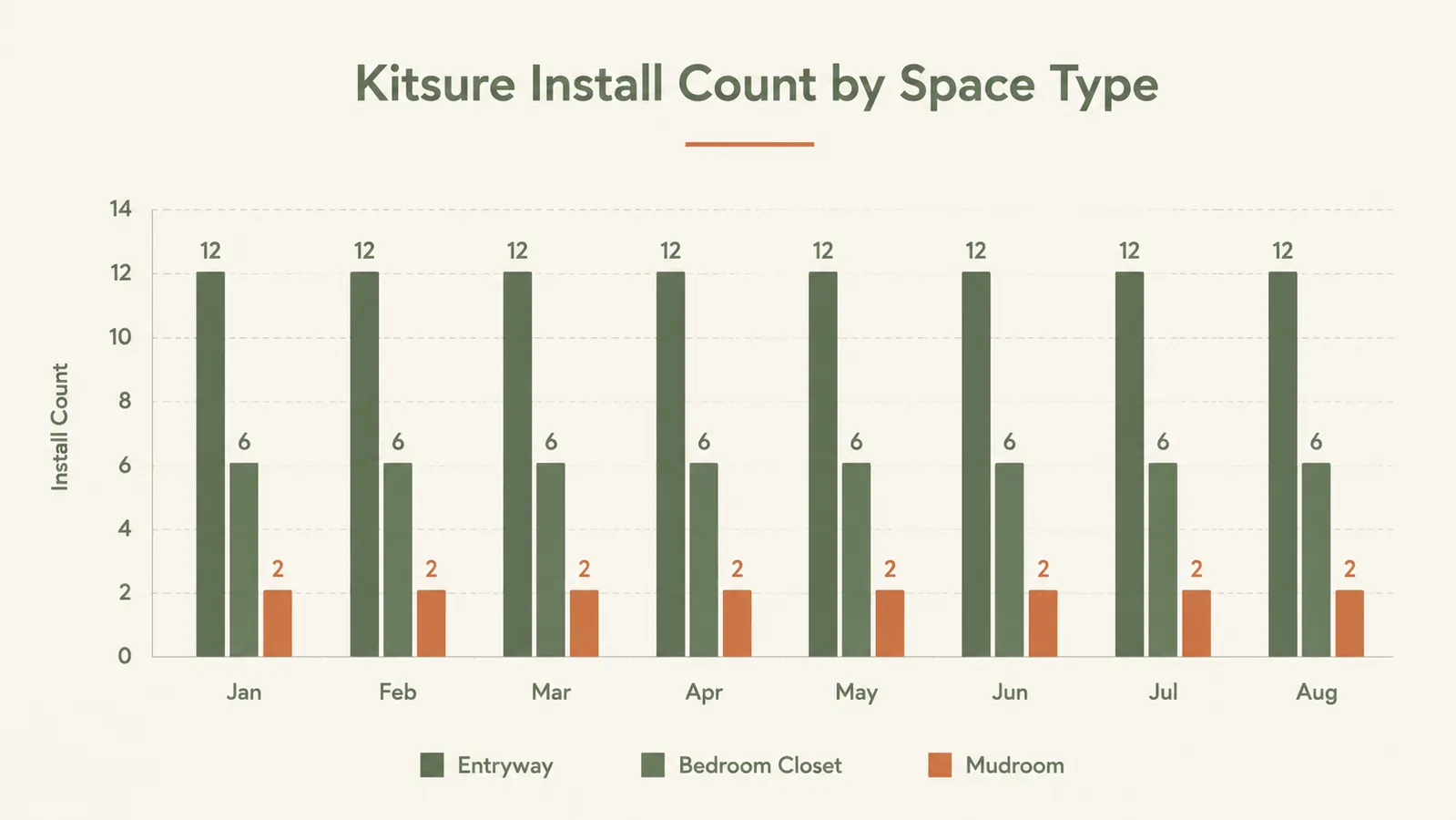
Of my 20-plus installs, 12 went in entryways, 6 went in bedroom closets alongside a clothes rod, and 2 went in mudroom corners. In every case I pulled it out of the box, connected the poles, slid the shelves in, and had shoes loaded within 30 minutes. The assembly instructions are clear enough that clients have assembled the reorder themselves without calling me.
The version I reach for most often is the 3-tier model, which holds roughly 6 pairs of adult shoes comfortably. The 4-tier version adds capacity but gets tall enough that the top shelf requires a bit of a reach for shorter clients. I have installed both. The 3-tier has had zero structural complaints from any household. One of my 4-tier installs developed a visible forward lean after about five months in a home with two teenagers who were dropping heavy work boots from above rather than placing them. I would call that a user issue, but it is worth flagging.
What the Non-Woven Fabric Cover Actually Does
The defining feature of this rack, compared to a bare metal wire or bamboo open shelf, is the non-woven fabric cover that wraps the exterior. That cover is doing two things. First, it hides the shoes from view at eye level when you walk in the door, which dramatically reduces visual clutter even if the shoes inside are tossed in at random. For clients who struggle to place shoes neatly, this is a bigger win than it sounds. Second, it gives the unit a softer look that works in entryways where a hard industrial rack would feel out of place.
The cover is not a rigid shell. It is more like a fitted fabric bag stretched over a frame. That means it will not protect shoes from moisture or mud tracked in from outside, which is an important distinction. Clients in wetter climates or households with dogs that come in muddy need to think of this as a dry-storage shoe rack, not a mudroom solution. In those cases I pair it with a rubber boot tray set just inside the door and reserve the Kitsure for everyday shoes that do not need decompression time.
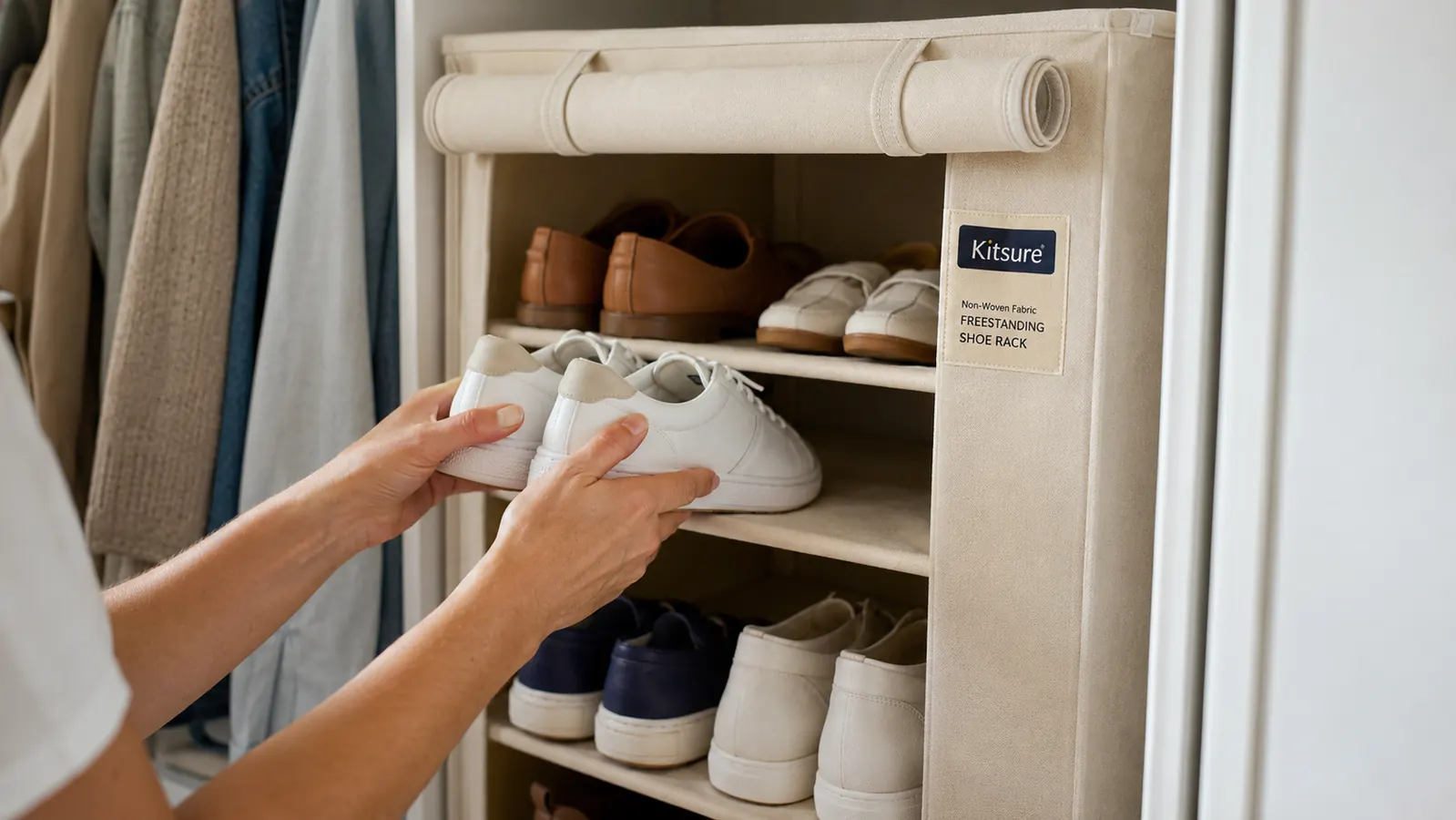
The fabric does pick up pet hair. I have had three clients with dogs or cats mention that the exterior needed a lint roller pass every couple of weeks. That is not unusual for any fabric item in a pet household, but it is worth knowing before you buy. The color is a neutral beige that has held reasonably well over eight months in all of my installs. No fading that I have noticed, though none of the units are in direct sunlight.
Durability Over Eight Months
The frame is steel tubing with a powder-coated finish. The shelves are mesh steel that sits inside the fabric cover. After eight months of daily use in real family homes, none of my installs have had a shelf collapse or a tube crack. The connections between tubes are friction-fit with plastic connectors. These connectors are the weakest point structurally. In most installs they are fine. In two installs where the rack is being moved regularly (a client who pulls it out when vacuuming and a rental property that gets reorganized between tenants), I have seen minor connector loosening. A few seconds of pressing them back together fixes it, but it suggests this rack is not designed for constant repositioning.
For clients who struggle to place shoes neatly, a cover that hides the visual chaos is a bigger win than any organizing system I can teach.
The weight capacity is listed at about 11 pounds per shelf. In practice that means 2 to 3 pairs of adult shoes on each tier with room to spare for sneakers and flats. Where I have seen shelves bow slightly is in a household with two teenage boys and a parent who stores work boots on the rack. Heavy work boots and hiking boots are at the top of the weight range. Over several months, the shelf mesh in that install developed a visible sag in the center. The rack still functioned, but aesthetically it was not great. My recommendation for households with heavy footwear: load lighter shoes on this rack and keep the heavy-duty boots on a floor tray or a more solid open-shelf unit.
The Assembly Experience
Assembly is faster than most furniture-style shoe racks. There are no tools required. The main steps are connecting the vertical poles, sliding the horizontal shelf bars through the fabric cover pockets, and clipping the connectors together. The whole process takes 15 to 25 minutes depending on whether you have done it before. I have assembled this rack solo at client homes without any difficulty. The instruction sheet uses diagrams rather than text, which is actually clearer than many written instruction sets for this category.
The one friction point is getting the fabric cover positioned squarely on the frame. If the cover is slightly off-center, the front zipper pulls unevenly and the whole unit looks lopsided. I have gotten better at this with practice. My advice: before you tighten any connectors, check that the fabric is centered and the zipper sits flat, then lock everything in. It saves you from disassembling and repositioning after the fact.
Where It Fits Well and Where It Does Not
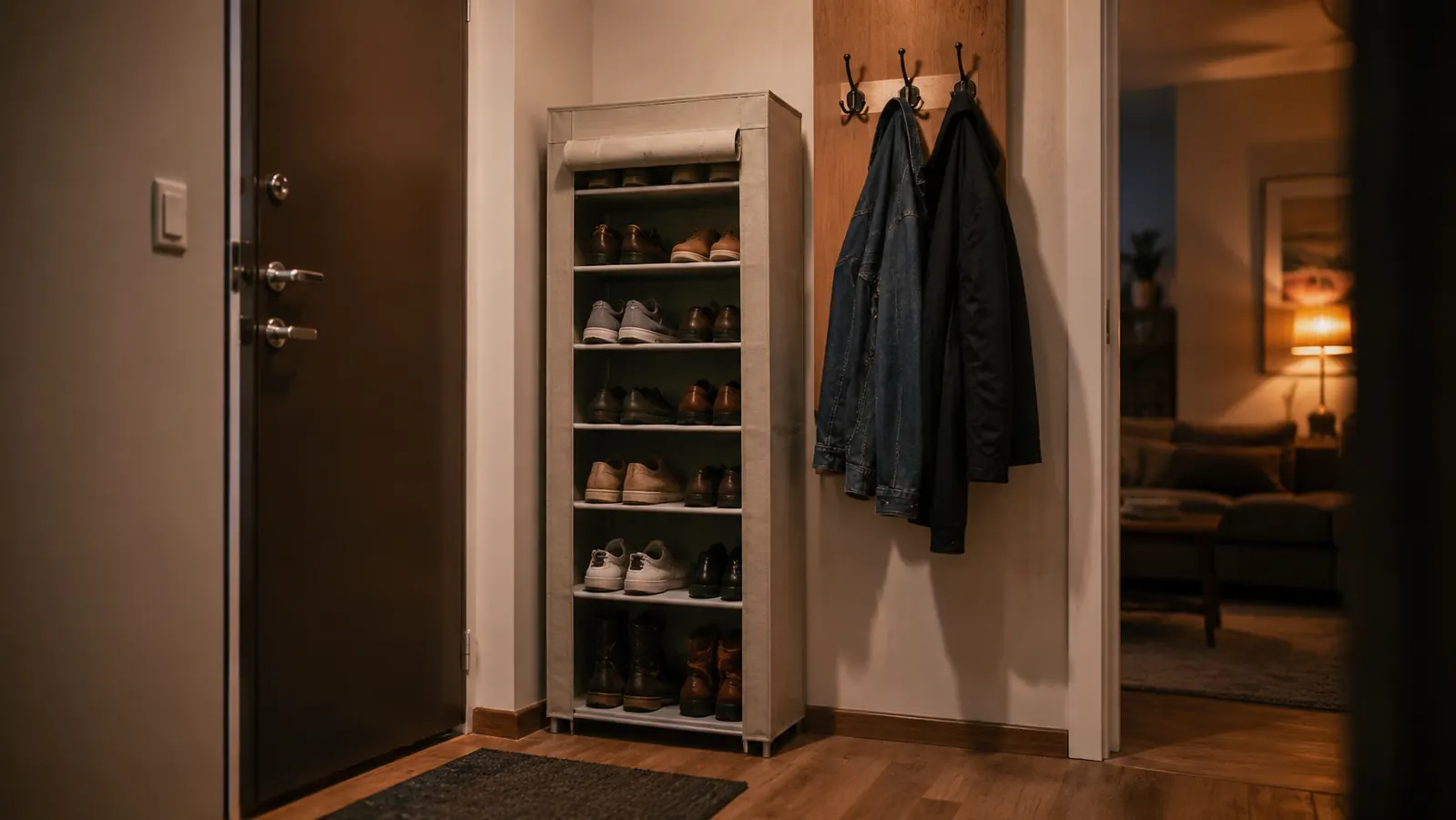
The homes where this rack has worked best are apartments and smaller houses where the entryway is a narrow hall with no built-in closet. In those spaces, a freestanding solution that looks decent and holds 6 to 8 pairs of shoes solves the problem cleanly and without any fuss. The Kitsure is 22 to 27 inches wide depending on the model, which fits most hallways without blocking traffic flow. I have also had good results in bedroom closets where there is floor space to spare but no dedicated shoe storage built into the system.
Where it fits less well: households with very high shoe volume (a family of 5 or 6 all buying new shoes regularly and needing 12-plus pairs visible), homes with persistent moisture near the entry, and any situation where the rack will be moved or rearranged regularly. In those cases I step up to a heavier open-shelf unit or a modular shoe cabinet with actual doors.
Alternatives I Considered
Before I settled on this rack as a regular recommendation, I tried several others in the same price range. Basic wire open-shelf racks are cheaper but shoes fall off rounded wire and the visual clutter defeats the purpose. Bamboo open-shelf racks look nicer but cost more and have no cover, so they work for tidy households and less well for ones with kids or busy mornings. Shoe cabinets with flip-down doors are excellent for entryways with more space and more budget, but they are bulkier and take longer to access, which matters when four people are leaving for school and work at the same time.
The Kitsure sits in the right lane for households that need something inexpensive, semi-enclosed, and easy to put together without a whole afternoon. It is not competing with a custom built-in. It is competing with the shoe pile on the floor, and against that standard it wins consistently. For a head-to-head comparison with the VASAGLE open-shelf bamboo rack, see my full comparison at the link below.
What I Liked
- Non-woven fabric cover hides visual clutter even when shoes are not placed perfectly
- Narrow footprint (22-27 inches) fits apartments and hallways where larger racks will not
- Tool-free assembly in under 30 minutes, clear diagram instructions
- Neutral beige finish blends with most home decor rather than announcing itself
- Lightweight enough to reposition without lifting heavy furniture
Where It Falls Short
- Fabric exterior picks up pet hair and needs regular lint rolling in pet households
- Plastic connectors loosen if the rack is moved or repositioned frequently
- Shelf mesh sags over time under heavy footwear like work boots or hiking boots
- Not moisture-resistant, so it is not the right choice right inside an exterior door in wet climates
- Fabric cover requires careful centering during assembly or it looks off-kilter
Who This Is For
This rack is a good fit for renters or homeowners who want a finished-looking, semi-enclosed shoe organizer for a narrow entryway or bedroom closet, do not have a built-in system to work with, and want something that looks better than bare metal at a price that makes sense. It is also a solid choice for anyone who has tried an open-wire rack and found that shoes kept sliding off or the look felt too utilitarian for the space. Households of 2 to 4 people with mostly everyday footwear (sneakers, flats, casual shoes) will get the most reliable long-term results and the least maintenance hassle.
Who Should Skip It
If your household has multiple people with heavy footwear, more than 10 to 12 pairs that need to stay visible and accessible, or a mudroom situation where shoes come in wet and dirty, this rack is not the right tool. In those cases the fabric cover becomes a liability rather than an asset. You want either an open-shelf unit with proper drainage spacing for wet shoes or a heavier-duty cabinet that can handle real daily load without any bowing. Households with pets who will chew or scratch at fabric items should also look elsewhere before committing.
Shoes off the floor, done in one afternoon.
The Kitsure non-woven shoe rack is a straightforward fix for entryways and closets where an open-wire rack falls short and a full cabinet is more than you need. Check today's price and size options on Amazon before deciding.
Amazon Check Today's Price on Amazon →