
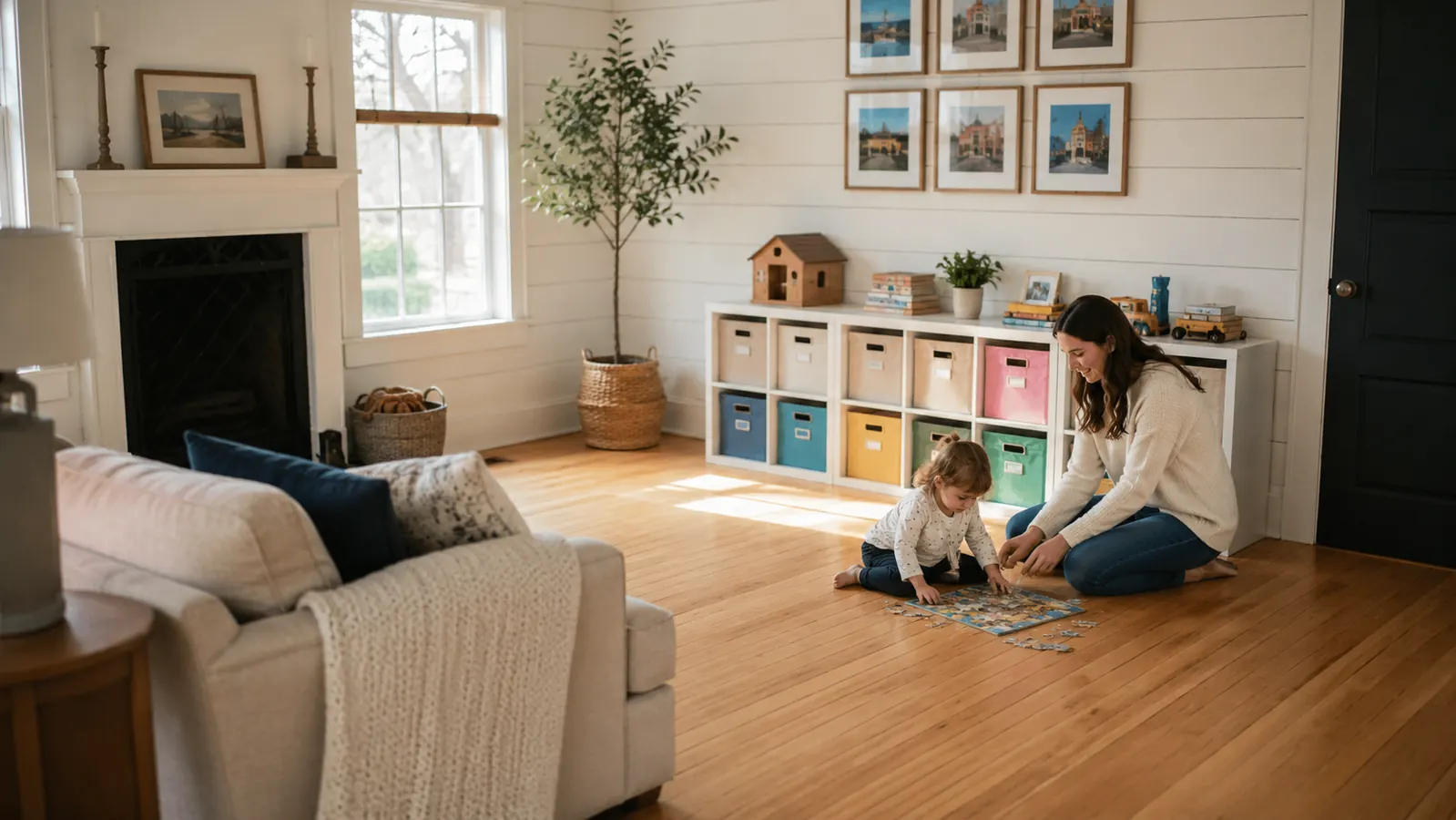
The first time I walked into Melissa's living room, I stepped on a xylophone. Not the gentle tap of a soft toy, the full-volume clang of a wooden mallet under a size-nine shoe at 9 a.m. on a Tuesday. Melissa, a mom of two kids ages three and five in a 1,400-square-foot rental in Ohio, had called me because the living room had stopped being a room for living. Every evening the floor was covered, every morning cleanup took twenty minutes and a lot of raised voices, and she felt like she was losing a fight she hadn't agreed to enter. She had tried a toy chest. She had tried a canvas cube shelf from a big-box store that sagged after three months. Nothing was sticking. What she needed wasn't more storage. She needed a system her kids could actually use on their own. That's what the Humble Crew toy storage organizer gave her.
I've been a professional home organizer for fifteen years. I have seen every variation of toy chaos a family can produce. And I can tell you that the problem is almost never the toys themselves. It's that the storage doesn't match the way kids actually put things away, which is fast, approximate, and done the moment something better catches their attention. A lid is a barrier. A deep chest is a black hole. A cube shelf with soft bins and no categories is a pile with walls. What works is visible, open, categorized, and low enough that a three-year-old can reach every bin without help.
Tired of the Nightly Toy Scramble? Here's What's Actually Working in Real Family Rooms
The Humble Crew 16-bin toy organizer is the unit I recommend most often for living rooms and playrooms. Open bins, sturdy frame, low enough for toddlers, color-coded enough to make cleanup a game instead of a fight.
Amazon Check Today's Price on Amazon →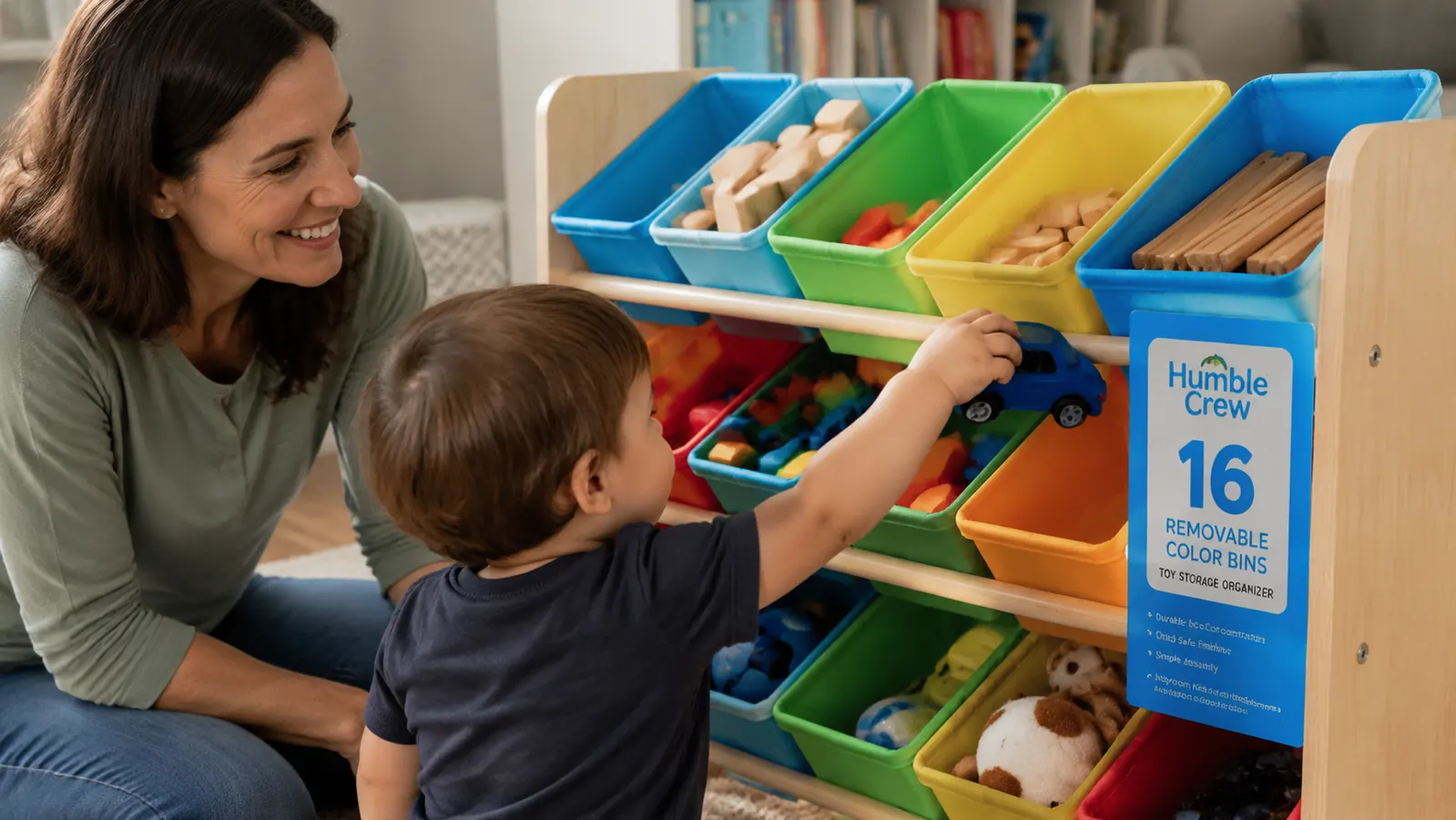
When I ordered the Humble Crew 16-bin organizer for Melissa's space, I already knew the format would work. I've installed this unit in more than a dozen client homes over the past couple of years. What I wasn't sure about was the placement. Melissa's living room had one wall that would fit it without blocking the couch sightline to the TV, and that wall had a floor vent about eighteen inches from the baseboard. We tucked the organizer slightly left of center and it landed exactly right. Assembly took me about thirty-five minutes working alone. The frame is wood composite, solid without being heavy, and the removable fabric bins slide in and out cleanly.
The sixteen bins are the thing that makes this system work for young kids. We sorted Melissa's toys into categories that matched how the kids actually played: cars and trucks in one bin, blocks in one bin, art supplies in one bin, stuffed animals in two bins, puzzles in one bin, and so on. Then we labeled each bin with a picture card, not just text, because her five-year-old could read some but her three-year-old couldn't read anything. Picture labels are the whole game at that age. I printed simple clip-art cards, laminated them, and tucked them into the front pocket of each bin. The organizer doesn't come with labels, which is the one thing I'd change about it, but the bins have a small front tab that holds a card perfectly.
Cleanup used to be a twenty-minute negotiation. The first evening after we set this up, her five-year-old walked over, dropped the cars in the car bin, and walked away. That was it.
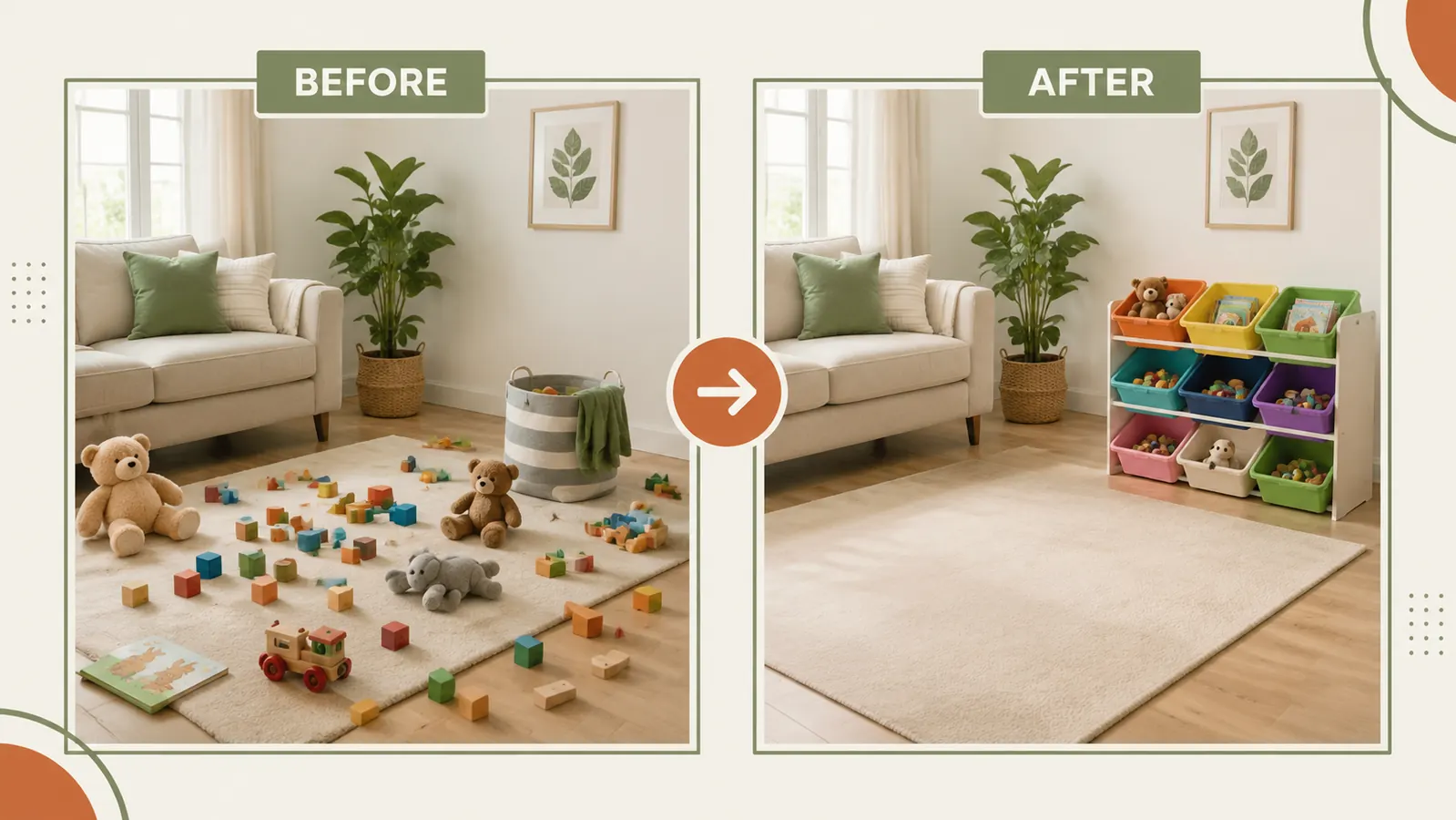
The evening after I finished the install, Melissa texted me. Her five-year-old had walked over to the organizer at the end of the day, dropped the cars in the car bin, and walked away without being asked. Her three-year-old needed a little coaching, but the picture labels gave her a target, and a target is all a three-year-old needs. By the end of the week, the twenty-minute nightly battle had become a five-minute tidy that the kids were mostly doing themselves. The floor stayed clear.
I want to be honest about what this organizer is and what it isn't. The frame is not furniture-grade hardwood. It won't win any design awards in a high-end home. The bins are fabric, not plastic, so if a child drops juice in one, it needs to come out and air dry. A couple of the bins Melissa has used for two years now have small frays at the top edge, nothing structural, but they show wear. For the price and the function, I think that's a fair trade. What it does consistently well is stay put, keep the bins from collapsing, and give kids a system they can actually understand and operate. That's the job.
What I'd Tell You If We Were Sitting at My Kitchen Table
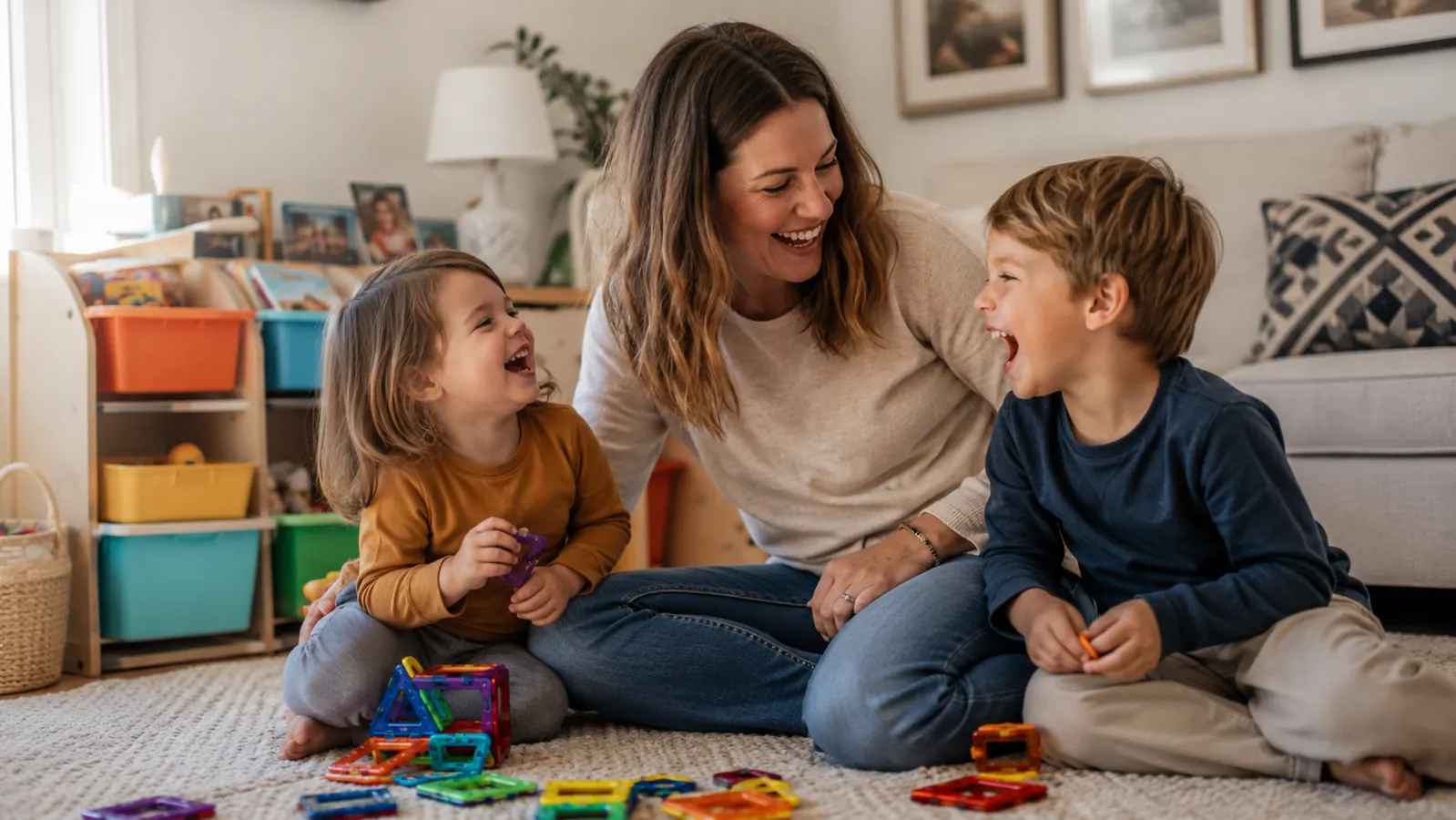
If you came to me and said your living room floor was a nightly disaster, here's exactly what I'd say. Don't buy another toy chest. Don't buy another soft cube shelf that will cave in the middle by spring. What you want is an open-bin organizer with categories your kids can see and reach. The Humble Crew 16-bin model is the one I come back to because the bins are removable (so you can bring the whole thing to the play area or swap bins as kids age out of toys), the frame holds its shape, and the color variety gives you a natural sorting system without any extra effort on your part.
Pair it with picture-label cards for kids under five, put it at a height where the lowest bins are at floor level, and give the system one week before you judge it. The first two or three days kids will test it. They'll dump bins and see what you do. Stay calm, re-sort with them once, and let the categories do the work. By the end of the first week, most families I work with are seeing a real change in how kids interact with the pickup routine. Melissa's kids are now five and seven, and that organizer is still the anchor of their living room. The floor stays clear. That's what I came in to do.
If the Floor Is Losing, This Is Where I'd Start
The Humble Crew 16-bin organizer is the unit I recommend most often for families with kids ages two through eight. Open bins, sturdy frame, removable for easy cleaning, and rated 4.7 stars by nearly 39,000 parents who've been where you are.
Amazon Check Today's Price on Amazon →