
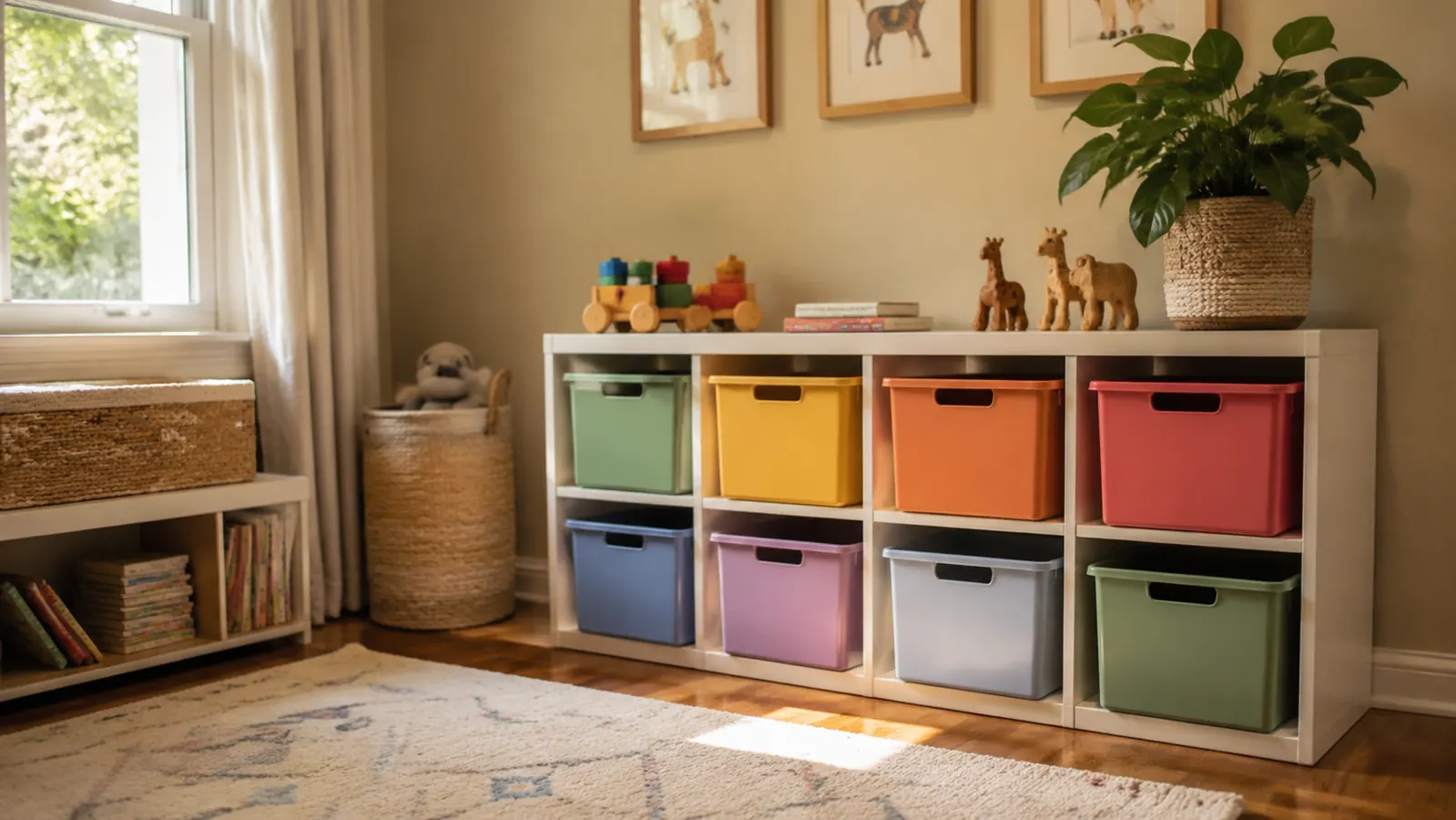
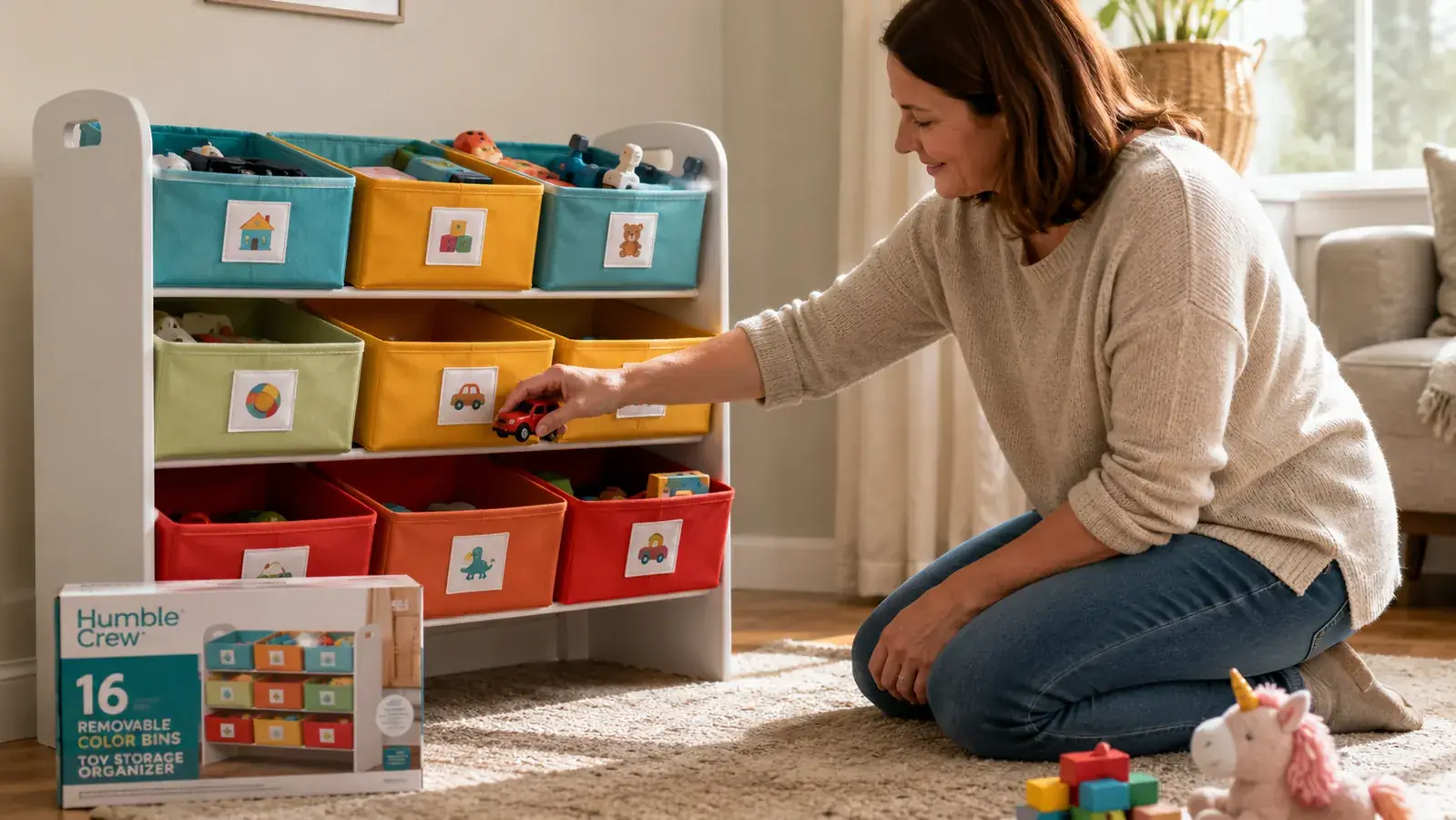
The first time I brought a Humble Crew toy organizer into a client's home, I had no idea I was about to start tracking that same unit for the next twelve months. The family had a four-year-old and a two-year-old, a living room that served as the primary play space, and a floor that had not been fully visible since sometime in 2023. I set up the 16-bin model in about forty minutes, arranged the bins by category, and left them with a simple picture-label system. When I came back three months later for a kitchen project, the organizer was still standing, most bins were still in their slots, and the mom told me it was the only storage system the kids actually used. That got my attention.
Since that first install, I have set up the Humble Crew 16-bin toy storage organizer in more than twenty client homes. Families with toddlers, families with elementary-aged kids, a few with both running around at once. I have checked back on most of them at the six-month and twelve-month marks, either through follow-up visits or photos from the families themselves. What I found was not a perfect product, but it was a genuinely useful one, with specific strengths that matter and a few real limitations worth knowing before you buy.
The Quick Verdict
A durable, well-proportioned toy organizer that survives real kid use and, more importantly, gets kids to actually put toys away. A few bin color choices fade and the frame wobbles slightly when fully loaded, but neither issue ruins the system.
Amazon Check Today's Price →Your living room floor is under there somewhere. This is the organizer that gets you back to it.
The Humble Crew 16-bin toy organizer is the unit I reach for first in client playrooms and family rooms. It holds up under daily use, kids engage with the bin system, and the removable bins mean cleanup takes seconds instead of minutes.
Amazon Check Today's Price on Amazon →How I Have Used It Across Client Homes
My testing process here is not lab-based. It is home-based. I install the organizer, help the family set up a bin category system, show the kids which bin is which, and then check in later to see what survived. That is actually a harder test than anything controlled, because real kids do not respect the experiment. They throw bins. They stand on the frame. They stuff six times the recommended load into one bin and leave three others completely empty for weeks.
Across my twenty-plus installs, I set up the 16-bin model in rooms ranging from dedicated playrooms to living room corners to a converted dining area. I used the organizer with kids as young as eighteen months and as old as nine. The majority of the families had at least one child between two and five, which I consider the peak chaos window. That is the age range where toys get grabbed from bins and dropped from heights and the organizer takes the most abuse.
I tracked four things at each follow-up: frame integrity, bin condition, whether the family was still using the system, and any modifications they had made on their own. That last point turns out to be the most interesting one, and I will get to it below.
The Frame and Build: What I Actually Saw Over Twelve Months
The Humble Crew frame is made from painted composite wood with a white finish. It is not solid hardwood, and it does not pretend to be. At the six-month mark across my client homes, every single frame was still structurally intact. No legs had given out, no shelves had buckled, and no joints had separated. That is a better track record than I expected given how much abuse toddlers put on furniture.
The one structural caveat: the frame does develop a slight wobble when every bin is fully loaded with heavier toys, like wooden blocks or die-cast vehicles. It is not alarming, and it rights itself when you remove some weight, but it is noticeable. I advise clients to keep the heavier items in the bottom-row bins and lighter, softer toys toward the top. That simple adjustment eliminates the wobble in practice.
The paint finish shows marks over time. By the twelve-month check-in, most frames had some scuff lines and a few small dings at the lower corners from toy impacts. For a playroom this reads as normal wear. For a living room where aesthetics matter more, it is worth noting that the white finish does not stay showroom-perfect. It stays functional, but it acquires the lived-in look of a piece that has done its job.
The Bins: Where the Real Long-Term Story Is
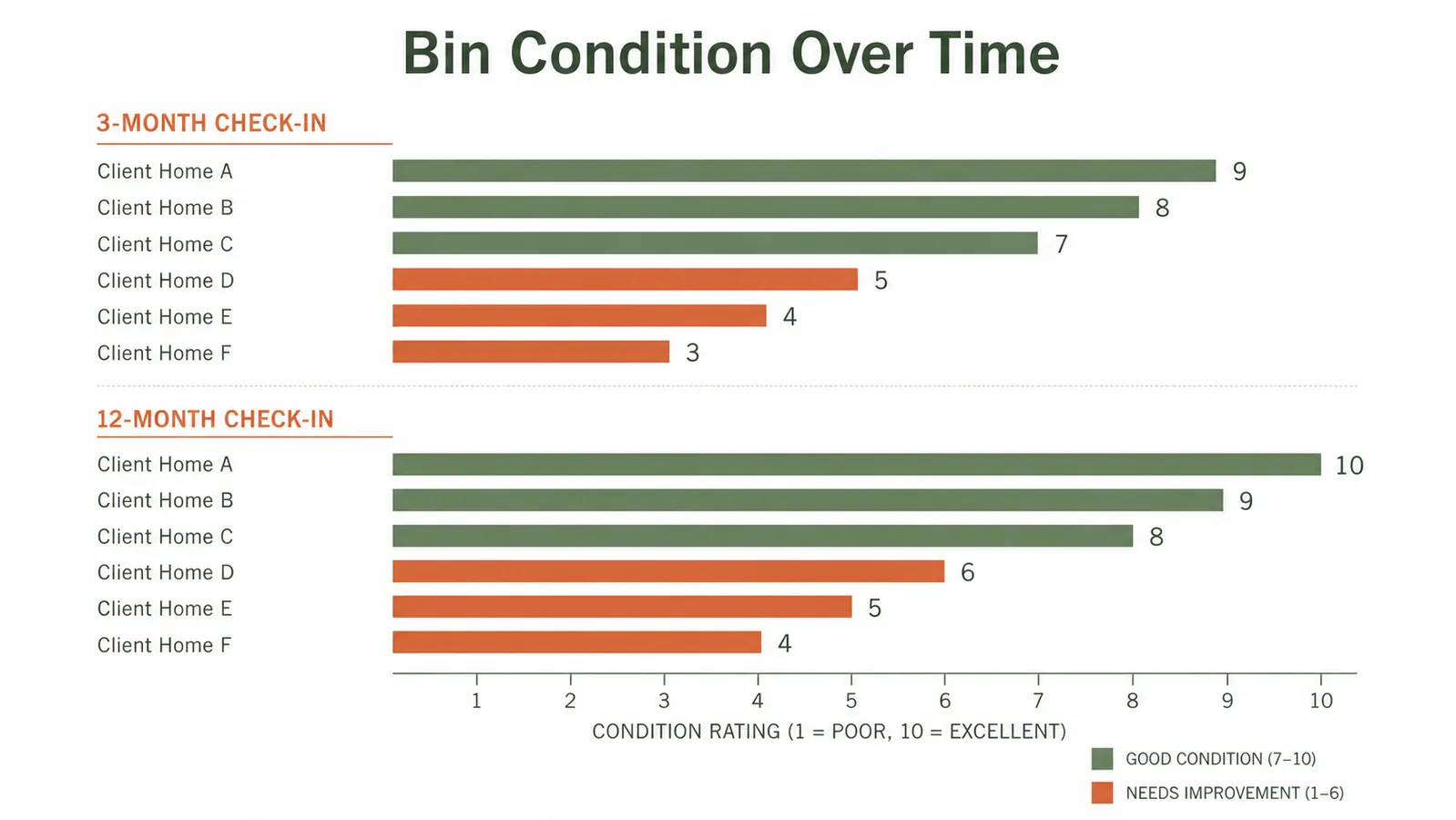
The sixteen removable fabric bins are what make or break this organizer, and they are the most varied part of the long-term picture. The bins that hold up best are the solid-color ones in deeper tones, especially the navy, green, and charcoal options. At twelve months those bins looked almost identical to how they started, with normal lint and a bit of fading at the rim where small hands grab them constantly.
The lighter-colored bins, particularly the yellow and light pink, showed more visible fading by month six. Nothing structural, just cosmetic dulling. A few clients mentioned it specifically. If you care about the color vibrancy long-term, I would lean toward the deeper tones or order a second set of replacement bins early so you have them when the time comes.
The bin handles held up well in every home I checked. I did have one client where a child had repeatedly hung from the handles, and by month eight, one handle had partially pulled away from its seam. That is genuinely unusual use, but I mention it because if you have a climber, this is a possible failure point. For normal daily remove-and-replace use, the handles showed no signs of failure across any other home.
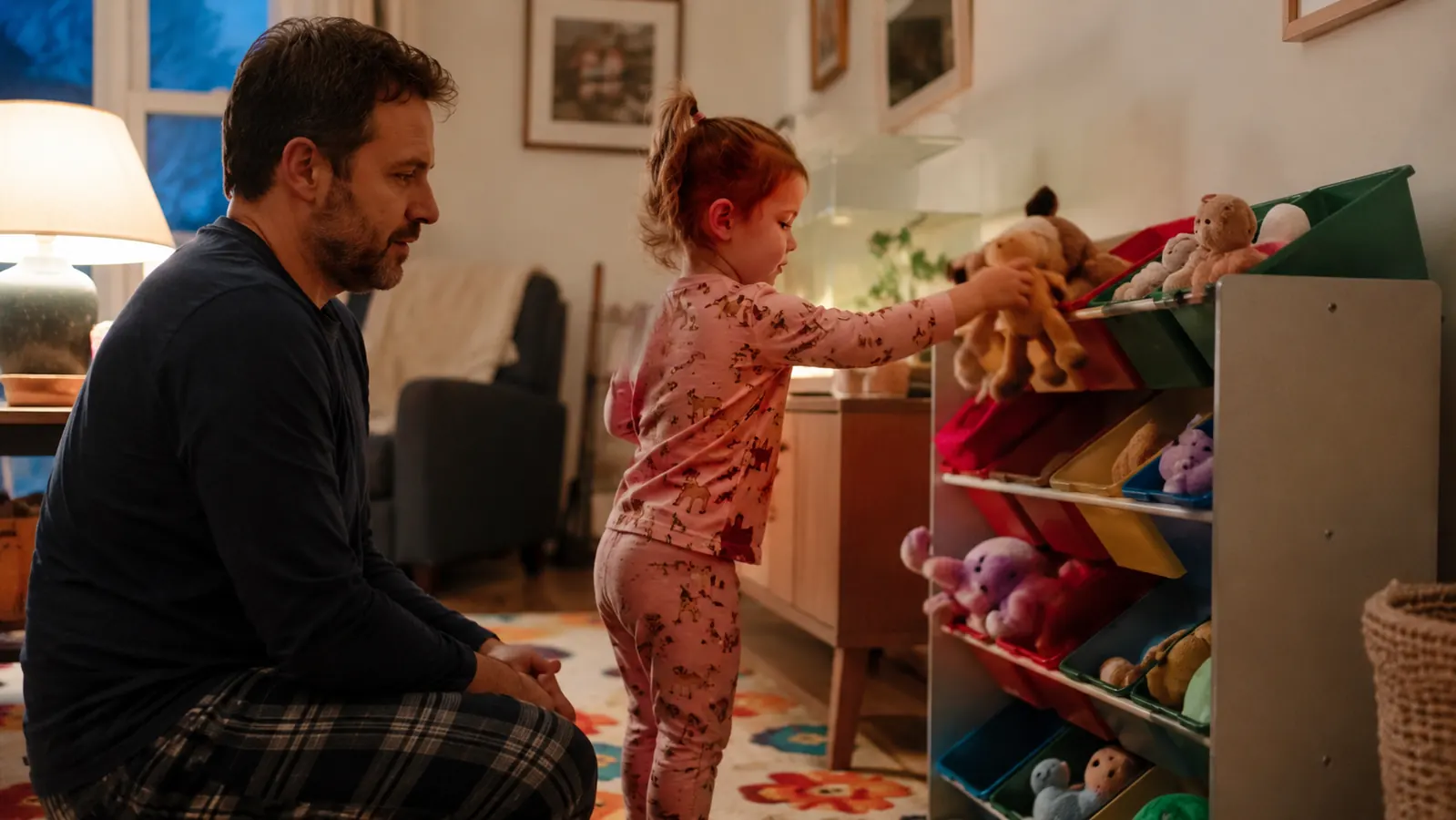
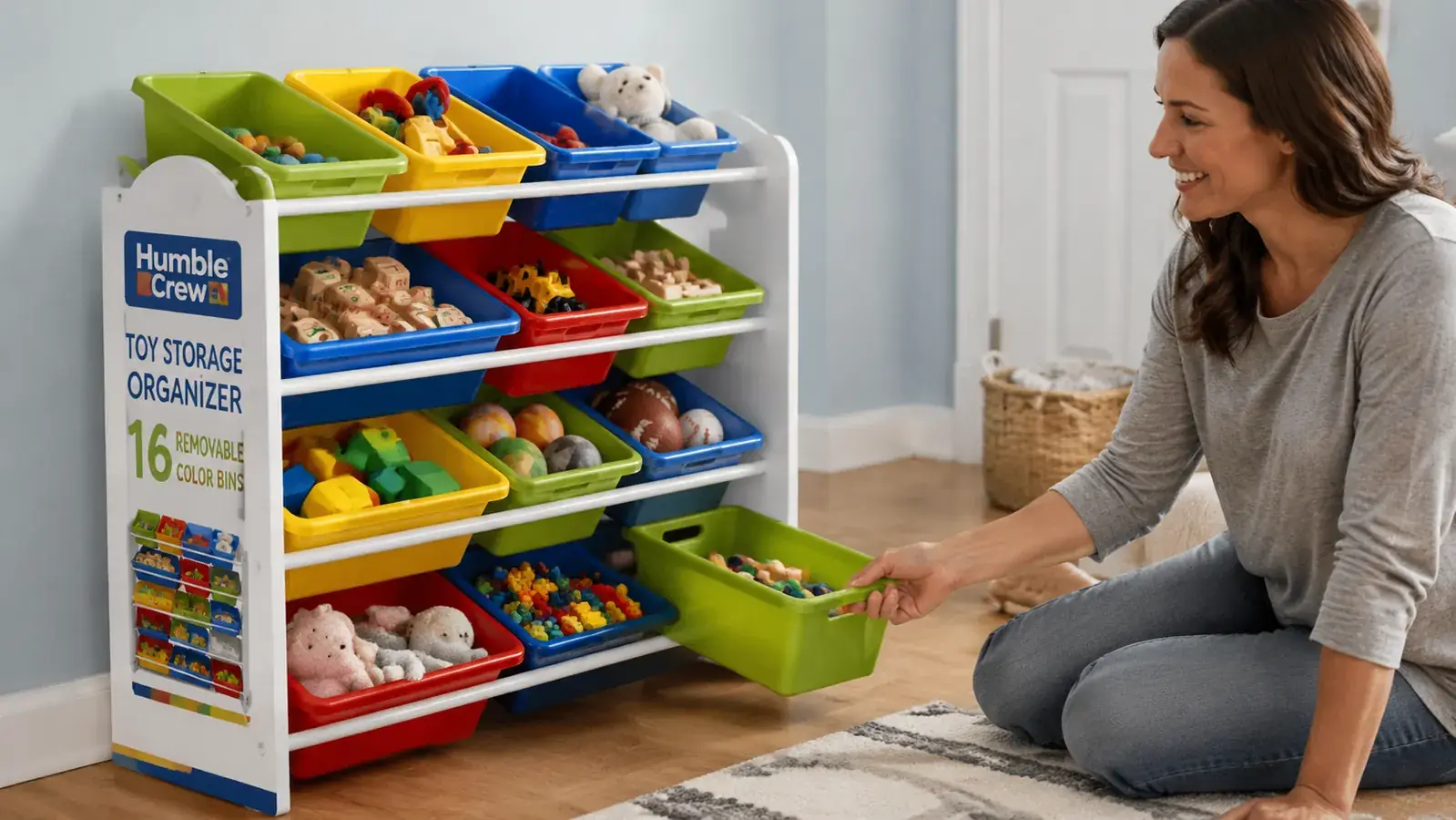
The bins are removable, which sounds like a small thing, but it changes how kids interact with the whole system. Instead of dragging toys out one by one, they grab the bin and bring it to where they are playing. Cleanup is putting the bin back. Most families I work with have never had a toy storage system where the kids actually return things. This one gets them there.
Whether Kids Actually Use It: The Most Important Metric
In my fifteen years as a professional organizer, I have seen more toy storage solutions fail not because of build quality but because kids ignored them. A system the child does not engage with is just expensive furniture. The Humble Crew organizer has the best adoption rate I have seen in any toy storage product in its price range.
My theory on why: the bin colors make it intuitive. Kids as young as two can sort by color before they can read a label. Blocks go in the blue bin. Dolls go in the pink bin. Cars go in the red bin. The physical act of removing a bin and carrying it to the play area, then returning it, is simple enough that a three-year-old can do it without help. Seventeen of my twenty-plus installs still had the family actively using the system at the twelve-month mark. Three had abandoned it, all for the same reason: the parents stopped reinforcing the bin categories and the system collapsed into everything-in-any-bin territory, which is functionally just a large toy box.
The organizer does not automatically create a tidy room. It creates a framework the family has to actively maintain for the first month or two until the habit takes hold. Once it does, most families report that cleanup time dropped from fifteen to twenty minutes of parental effort down to five minutes or less.
The 16-Bin vs 12-Bin Question
Humble Crew makes this organizer in both a 12-bin and a 16-bin configuration. Clients ask me regularly which one to get, and my answer is almost always the 16-bin. More bins means more specific categories, which means kids can actually sort correctly. With twelve bins you are forced into broader categories like 'small toys' or 'stuffed animals plus dolls,' which creates ambiguity. With sixteen bins you can be specific: one bin for Legos, one for matchbox cars, one for dress-up accessories, one for art supplies. Specificity is what makes a bin system sustainable.
The 16-bin model is also proportionally better suited to most playroom corners I work with. The footprint is not dramatically larger than the 12-bin, but the visual weight looks more intentional and complete against a wall. If you are working with a very small space, say less than three feet of wall width, the 12-bin makes more sense. Otherwise, go with sixteen.
What I Liked
- Frame held structurally intact across all twenty-plus installs at the twelve-month mark
- Removable bins drive genuinely better kid engagement than fixed-shelf systems
- 16-bin configuration allows specific enough categories that kids can sort without help
- Bottom-row bins are accessible to toddlers without tip risk when back is wall-mounted
- Bin handles stayed functional under normal daily use across every family I checked
- Easy to wipe down inside the bins and vacuum around the frame
Where It Falls Short
- Light-colored bins (yellow, light pink) show visible fading by month six in high-use homes
- Frame develops slight wobble under full load of heavy toys, especially if top bins are overloaded
- Paint finish shows scuffs over time, which reads as normal wear in a playroom but is noticeable in a living room
- System requires active parental reinforcement for the first four to six weeks or it collapses into a large toy box
- No replacement bin color packs sold separately, so matching originals later requires ordering the same full color set
How Clients Modified It Over Time
One of the most telling signs of a product's real-world success is how people adapt it. The most common modification I saw across my client installs was picture labels stuck to the front of each bin. Clients used simple printed icons, hand-drawn cards, or small photos cut from toy packaging. This is not a criticism of the organizer; it is a sign that the bin system invited customization. The families who added picture labels had the highest usage rates at the twelve-month check-in.
A few clients added a small rug directly in front of the organizer, which created an implicit pickup zone. Toys dropped in that zone were close enough to the bins that kids picked them up more often. That is a behavioral nudge that cost nothing, and I now recommend it during every install. The organizer, the rug, and clear bin labels form a system that runs almost on its own once kids are old enough to understand it, usually around age three.
Two families rotated bin placement seasonally, swapping which categories got the most accessible spots based on what their kids were into at the time. One family moved the art supply bin to the top row in summer when outdoor play dominated and the art bin was rarely touched, freeing up prime eye-level slots for outdoor gear storage like sunscreen, bubbles, and sidewalk chalk. That level of adaptability is only possible because every bin lifts out cleanly with no tools needed.
Alternatives I Considered for the Same Clients
Before settling on the Humble Crew as my go-to, I tried two other organizers in comparable client situations. One was a stackable cube shelving unit with fabric bins that fit into open cubes. The visual result was cleaner, but kids had a harder time understanding the system because the bins sat inside the cubes rather than on open shelving, and pulling a bin out without tipping adjacent items became frustrating for younger kids. Usage dropped off by month three in both homes where I installed it.
The other alternative was a wide open-top basket arrangement, essentially large wicker baskets lined up along a low bench. Kids loved tossing things in, but retrieval was chaotic because nothing was categorized and everything was buried under everything else. Cleanup was fast; finding a specific toy was not. Parents in those homes consistently reported that toy frustration actually increased compared to the pre-system chaos because expectations had been set and then not met. The Humble Crew bin setup avoids both problems: easy retrieval and clear categories.
Who This Is For
This organizer is the right call for families with kids between two and seven who have a defined play space, whether that is a dedicated playroom or a section of the living room. It works best when the family commits to the bin category system for the first month. Parents who are willing to spend five minutes a day in those early weeks reinforcing which toy goes where will see a genuine long-term payoff. If you have a child who is just starting to understand categorization, this is the system that will grow with them over the next several years.
Who Should Skip It
If you are looking for something that blends invisibly into a formal living room or a home with dark wood furniture, the white frame will feel out of place, and the wear it develops over time will bother you. Families with kids mostly under eighteen months will not get much out of the bin system yet; a simpler open basket setup serves those ages better. And if the adults in the home are not going to reinforce the system at all, this organizer will not save itself. No storage product can. But if the conditions are right, it is the most consistently effective toy storage solution I have used in fifteen years.
Twenty client homes, twelve months, and this is still the toy organizer I recommend first.
The Humble Crew 16-bin toy storage organizer is not perfect, but it does the one thing most toy storage fails at: it gets kids to actually put things back. If your floor has not been visible since the last birthday party, this is the place to start.
Amazon Check Today's Price on Amazon →